Welcome to issue two of The Attention Span Newsletter by me, Canan (Ja’anan) Marasligil.͏‌ ͏‌ ͏‌ ͏‌ ͏‌ ͏‌ ͏‌ ͏‌ ͏‌ ͏‌ ͏‌ ͏‌ ͏‌ ͏‌ ͏‌ ͏‌ ͏‌ ͏‌ ͏‌ ͏‌ ͏‌ ͏‌ ͏‌ ͏‌ ͏‌ ͏‌ ͏‌ ͏‌ ͏‌ ͏‌ ͏‌ ͏‌ ͏‌ ͏‌ ͏‌ ͏‌ ͏‌ ͏‌ ͏‌ ͏‌ ͏‌ ͏‌ ͏‌ ͏‌ ͏‌ ͏‌ ͏‌ ͏‌ ͏‌ ͏‌ ͏‌ ͏‌ ͏‌ ͏‌ ͏‌ ͏‌ ͏‌ ͏‌ ͏‌ ͏‌ ͏‌ ͏‌ ͏‌ ͏‌ ͏‌ ͏‌ ͏‌ ͏‌ ͏‌ ͏‌ ͏‌ ͏‌ ͏‌ ͏‌ ͏‌ ͏‌ ͏‌ ͏‌ ͏‌ ͏‌ ͏‌ ͏‌ ͏‌ ͏‌ ͏‌ ͏‌ ͏‌ ͏‌ ͏‌ ͏‌ ͏‌ ͏‌ ͏‌ ͏‌ ͏‌ ͏‌ ͏‌ ͏‌ ͏‌ ͏‌ ͏‌ ͏‌ ͏‌ ͏‌ ͏‌ ͏‌ ͏‌ ͏‌ ͏‌ ͏‌ ͏‌ ͏‌ ͏‌ ͏‌ ͏‌ ͏‌ ͏‌ ͏‌ ͏‌ ͏‌ ͏‌ ͏‌ ͏‌ ͏‌ ͏‌ ͏‌ ͏‌ ͏‌ ͏‌ ͏‌ ͏‌ ͏‌ ͏‌ ͏‌ ͏‌ ͏‌ ͏‌ ͏‌ ͏‌ ͏‌ ͏‌ ͏‌ ͏‌ ͏‌ ͏‌ ͏‌ ͏‌ ͏‌ ͏‌ ͏‌ ͏‌ ͏‌ ͏‌ ͏‌ ͏‌ ͏‌ ͏‌ ͏‌ ͏‌ ͏‌ ͏‌ ͏‌ ͏‌ ͏‌ ͏‌ ͏‌ ͏‌ ͏‌ ͏‌ ͏‌ ͏‌ ͏‌ ͏‌ ͏‌ ͏‌ ͏‌ ͏‌ ͏‌ ͏‌ ͏‌ ͏‌ ͏‌ ͏‌ ͏‌ ͏‌ ͏‌ ͏‌ ͏‌ ͏‌ ͏‌ ͏‌ ͏‌ ͏‌ ͏‌ ͏‌ ͏‌ ͏‌ ͏‌ ͏‌ ͏‌ ͏‌ ͏‌ ͏‌ ͏‌ ͏‌ ͏‌ ͏‌ ͏‌ ͏‌ ͏‌ ͏‌ ͏‌ ͏‌ ͏‌ ͏‌ ͏‌ ͏‌ ͏‌ ͏‌ ͏‌ ͏‌ ͏‌ ͏‌ ͏‌ ͏‌ ͏‌ ͏‌ ͏‌ ͏‌ ͏‌ ͏‌ ͏‌ ͏‌ ͏‌ ͏‌ ͏‌ ͏‌ ͏‌ ͏‌ ͏‌ ͏‌ ͏‌ ͏‌ ͏‌ ͏‌ ͏‌ ͏‌ ͏‌ ͏‌ ͏‌ ͏‌ ͏‌ ͏‌ ͏‌ ͏‌ 
the attention span (by Canan (Ja’anan) Marasligil)

reflection, analysis, imagination by Canan (Ja’anan) Marasligil


#2 / BEYOND INTENTIONS

Welcome to issue two of The Attention Span Newsletter by me, Canan (Ja’anan) Marasligil. I’m a writer, a literary translator, an artist and a curator of cultural programmes based in Amsterdam.

Every other week, I take the time to reflect and offer a glimpse of how I see the world through the lens of culture, art, translation, poetry and literature. Each issue has a short essay, a nerdy look at translation, a page from one of my notebooks, a list of things to read, watch or listen to, and a highlight from my archives.

If you prefer an audio experience, you can listen to me reading the newsletter to you. You can also support my work via Patreon.

Thank you for your presence and attention!

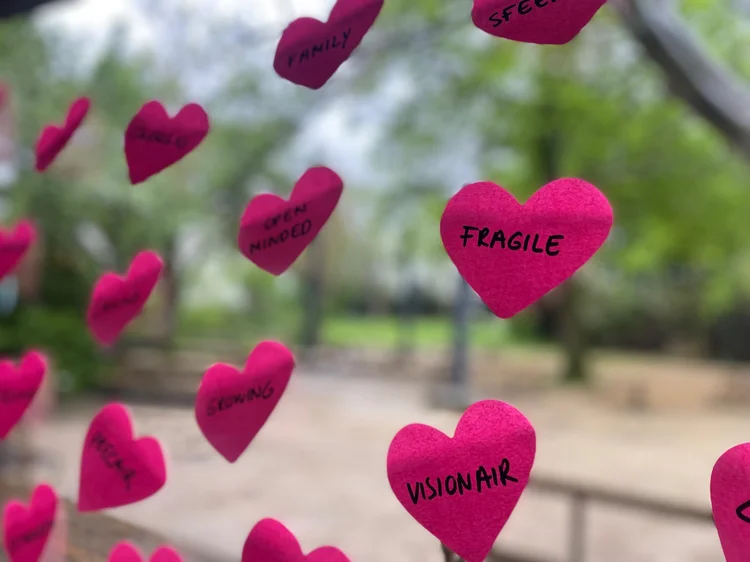
overlooking the garden


THE ESSAY: BEYOND INTENTIONS

Lauryn Hill’s voice singing “See the road to hell is paved with good intentions” from her famous MTV Unplugged album released in 2002, has been lingering in my head. It is called Mr Intentional and talks about the nature of good intentions, oftentimes used to manipulate or exert power on others. To me, “Mr Intentional” represents the system we live in: a discriminatory, cruel, racist, elitist, ableist patriarchy where the “good” in intentions mostly mean self-serving profit. A system we are all unfortunately part of and sometimes, even repeat its mechanisms in our own microcosms, no matter how well-intentioned we are and where we stand on the political spectrum.

Two weeks ago, I participated in a team exercise on safe work practices organized by amazing people I have the privilege to work with in the cultural and literary sector. Our morning session took place in a cultural space in Amsterdam with a public garden. As we were reconnecting with each other around a cup of coffee before starting the work, I noticed someone sitting on his own in the garden. He was using a mobility scooter with a small cart in the front filled with all sorts of things from clothes to objects, including an umbrella. He had a full grey beard and long hair à la Patti Smith appearing from under his hat. The layers of clothes he was wearing formed an armour around his body. From everything I learned since my earliest memory, this person entered the category of “homeless” in the encyclopedia of cruelty our societies had created, and in extent, was in need of support. At least a cup of coffee. So, I approached him all smiles with a cup of coffee ready to be given away.

“Can I say no?” he said kindly but assertively. I nodded while still offering if I could get him anything else. Tea, water, an apple? He was slightly embarrassed by my insistence, which, believe me, was filled with good intentions. He said he had enough to drink and eat for today and pointed at his pants. There was a moment of silence as I understood what he meant. I felt ashamed to have put this person who was just minding his own business in a quiet park, into a position where he had to hint to me that toilets for disabled homeless people are far from easy to use – if ever to be found, and that he had to hack his way to exist in this world to be able to spend a day without having to go to the toilet more than what was necessary (or possible). That meant reducing the amount of liquid he consumed. I apologized. “You mean well” he added with a genuine smile I’m not sure I deserved. I wished him a good day and went back to join my session on safe work practices.

This failure of mine to see what someone truly needs before I put my own wish to offer help – some sort of a saviour complex, is something I recognize from working in the cultural sector with knowledgeable and well-intentioned people trying to create collective experiences for all in what we call safe and inclusive spaces. I spent two decades working with cultural, artistic and literary organizations – from the institutional to the independent ones, and the attempts to make cultural programmes accessible for as many people as possible is real. The intentions exist. But very often, next to a lack of financial and logistical resources, we also fail to truly listen to what people need.

Just like I did with that person in the garden, we tend to assume what people’s needs are without asking or listening to those concerned. We may be good at bringing different communities to our events, but I feel we fail at being truly inclusive when it comes to people with visible and invisible disabilities, as well as those living in poverty or under the level of income that allow them access to the collective experience of literature and culture.

Aliya Gulamani, commissioning editor and editorial lead at Unbound – the world’s first crowdfunding publisher, wrote a piece for The Bookseller on why literary festivals need to listen to what Deaf people are saying about accessibility. “If you're a literature programmer or event organiser, do take a moment to read why there's nothing for us without us,” Gulamani shared on Twitter. While this piece focuses on the needs of Deaf people and the UK literary scene, what Gulamani calls “performance accessibility” really stroke a cord with me.

I think we are all guilty of “performance accessibility” to some extent, even the cultural spaces with good practices already when it comes to inclusion. I don’t blame the individuals working in those spaces. I’m also not interested in self-shaming and living in constant guilt for not doing well enough within a sector and industry operating on a very precarious level for many of its actors. I know many of you reading are working in those spaces, I am inviting us all to reflect further on what we are not doing well yet and how we could do better, together.

Since we care about collective experiences, we need to constantly question who is and who isn’t included within this so-called “collective” and what are the terms to “experience” it.

Whether we like it or not, we are all part of a “Mr Intentional” system that remains ableist, classist, racist, and we all know how many of these realities intersect in people’s lives. Many cultural spaces depend on public funding to exist, and this income remains fragile and scarce. But I don’t want us to hide behind resource-related issues and say we already do well enough. I want all of us to read Gulamani’s piece, for example, and reflect on how many deaf people we actually reach with our cultural and literary events, and why is the number so low or non-existent? I want funding bodies to prioritize accessibility for people with visible and invisible disabilities and make sure there is extra funding for organizations to do the work to not only create spaces for everyone to attend but get to know the communities we want to invite to our programmes. And most importantly, shifting our mindset when we make and promote programmes to doing with and not only for.

If the heart of our work is to think about bridging creativity and imagination with a wide variety of people, then we must challenge ourselves and the systems we depend on, to get better at connecting with the people we don’t know yet. We can start with the spaces where we have influence, and with listening instead of assuming. I don’t want to ignore the person sitting on its own in the garden, but next time, instead of approaching them ready with a cup of coffee in hand, I will start by asking how they are, if it’s okay for me to join them contemplating the garden, and wait to see if they’re open for a conversation. I will create a space where they can engage with me in their own terms.


ON TRANSLATION

In L’imaginaire des langues, a series of interviews between Lise Gauvin and writer Édouard Glissant, Glissant tells how today a writer who does not know any other language does take into account when writing, even unconsciously, the existence of other languages around them. One can no longer write a language in a monolingual manner. He says, “we have to take into account the imaginary worlds of languages” (my translation - The original French text is “On est obligé de tenir compte des imaginaires des langues.”)

When people ask which language you need to know better when translating (the source language, or the target language), I always respond: you need to know as many languages as possible. And I believe, like Édouard Glissant, that we all have many languages within our imaginations.

Oftentimes, I come to a translation via another language, and sometimes one that isn’t even directly related to any of the two languages I am working with within a translation project. A recent example occured as I was translating from Dutch into English. Reading the sentence “soms ietswat gezochte” I could feel the meaning in Turkish, but not in English immediately (I arrived at the translation “far-fetched” via the Turkish “zorlama”). That happens to me with French too, and sometimes with another language I don’t even know that well but have heard in a song or from a character on a TV show. Our imaginations are built on many external things, in many languages.


LISTENING, WATCHING, READING

  • Watch: I’ve finished writing an essay on Etel Adnan last week and have been diving back into a lot of material about this incredible artist and poet, whom we lost in 2021. One video I wanted to share is this short film made by the Van Gogh Museum in Amsterdam, as part of the exhibition Colour as Language, which was on show in Spring 2022. If you don’t know Etel Adnan’s work, this video offers a nice way to dive in.

  • Read: In this excellent piece, writer Breanne Mc Ivor challenges narrow visions of Trinidad and how she refuses to adapt her writing to the needs of US readers. Here’s a fragment in which I also recognized my own struggle – and the one of many of my writer friends: “However, faced with the challenge of securing an agent, I began to wonder whether authenticity was the hill I wanted to die on. I had heard many stories of Caribbean authors whose publishers asked them to change “ent” to “ain’t” so the language wouldn’t confuse readers or Caribbean writers who were asked to edit because their books lacked “relatable” characters; a term that begs the question, relatable to whom?”

  • Listen: Out of SPACE podcast, hosted by artist and curator Cathy Lomax. I really loved listening to the episodes focusing on the economics of making art (the whole series titled “Artonomics”) as well as those on “care”.


A PAGE FROM ONE OF MY NOTEBOOKS

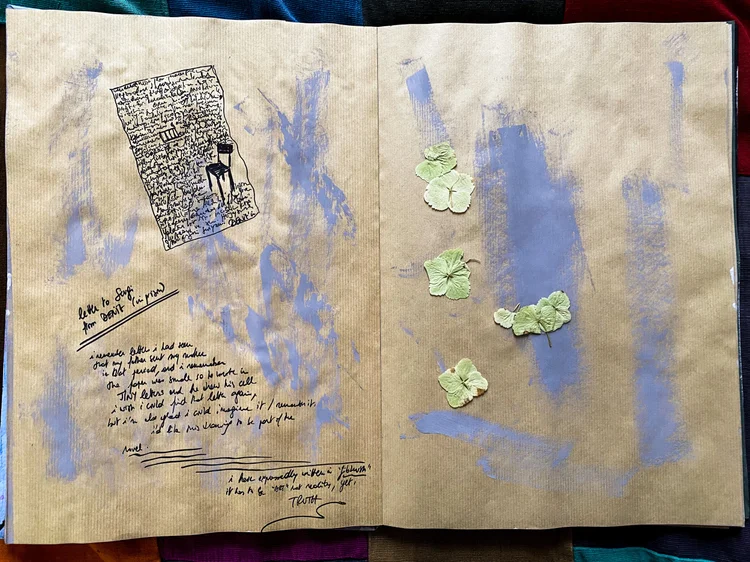
small notebook open on a page with initial notes on the poem frozen in migration

This notebook is an A3 format with pages made of craft paper, so perfect for play. It’s the sketchbook I’ve been using as part of the writing and editing process of my novel. You can see in the open spread here, on the left side is the sketch of a letter (the one written by one of my characters from prison, to his beloved wife), and under I’ve added a few notes. On the right side are dried flowers, these are from the hydrangea on my terrace. There are also some grey blueish brushstrokes, from when I painted the walls of my living room.


FROM THE ARCHIVES

Tue, Dec 21

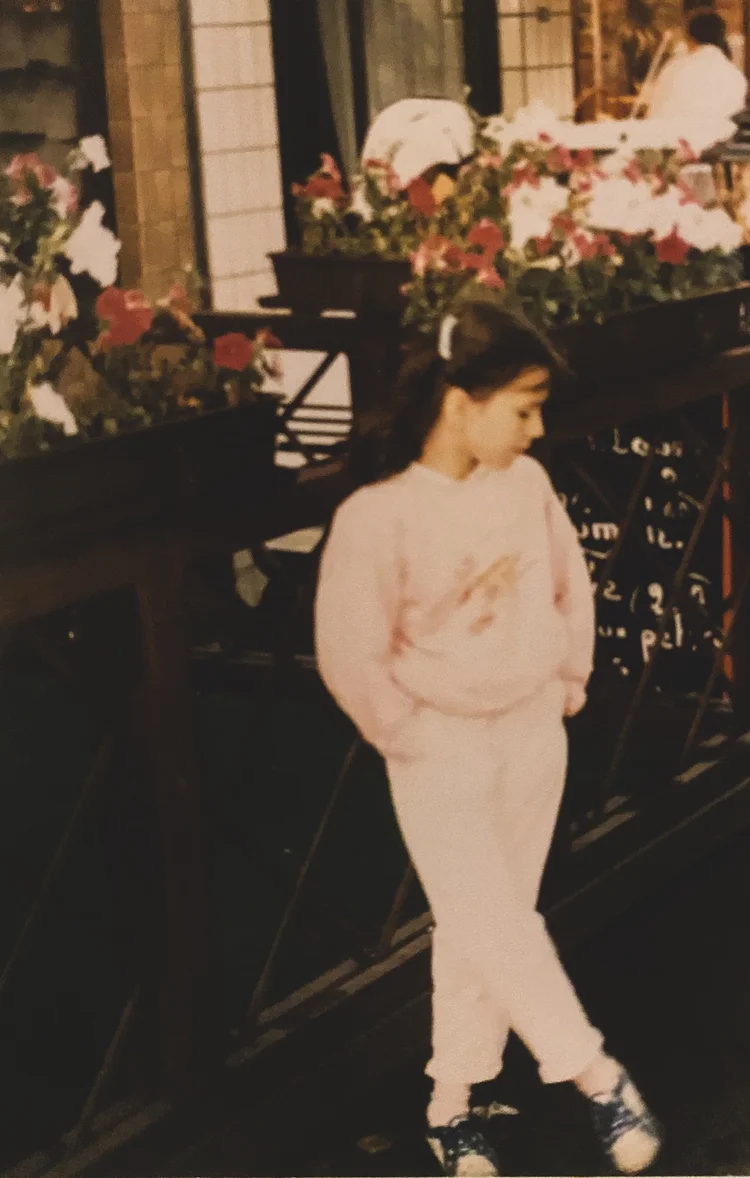
truth is in all the frames

i am showing you a photograph taken three decades ago, somewhere in Luxemburg, most certainly by my father: you cannot see but my mother, my brother and my maternal grandparents were also in this

 Read More 
 

PODCAST

🎙️ an audio version of the attention span newsletter is available on your favourite podcast app: Spotify, Apple Podcasts, Overcast…or to listen on the attention span website.


ABOUT

Canan (Ja’anan) Marasligil (she/they) is a multilingual writer, artist, literary translator, performer, editor, podcaster and cultural programmes curator based in Amsterdam. She established The Attention Span website and its newsletter to publish their work independently: making the time to reflect, analyse and imagine.

 LEARN MORE ABOUT CANAN 
 

Thank you so much for reading! Feel free to share this newsletter with your friends, on your social media and more. Here’s the link to subscribe: https://theattentionspan.com/subscribe

When quoting or sharing content, make sure to attribute it to the author. Unless otherwise stated, all content (writing, photography, design) created and published in this newsletter is authored by me, Canan (Ja’anan) Marasligil.

You can support my work for 3 € a month via my Patron page.

 
the attention span (by Canan (Ja’anan) Marasligil)
youtube spotify vimeo twitter instagram

Canan Marasligil is established as a freelancer under Studio Zeytin (registered at the Dutch Chamber of Commerce KvK: 73770450), based in Amsterdam, The Netherlands. See our terms of use for more details. You received this e-mail because you have subscribed via the attention span website. If you were added by mistake without your consent, or do not wish to follow this content anymore, you can unsubscribe via the link below.

Studio Zeytin, 1011TW, Amsterdam, The Netherlands

Powered by Squarespace

Unsubscribe