|
Welcome to issue seventeen of The Attention Span Newsletter by me, Canan “Ja’anan” Marasligil.͏ ͏ ͏ ͏ ͏ ͏ ͏ ͏ ͏ ͏ ͏ ͏ ͏ ͏ ͏ ͏ ͏ ͏ ͏ ͏ ͏ ͏ ͏ ͏ ͏ ͏ ͏ ͏ ͏ ͏ ͏ ͏ ͏ ͏ ͏ ͏ ͏ ͏ ͏ ͏ ͏ ͏ ͏ ͏ ͏ ͏ ͏ ͏ ͏ ͏ ͏ ͏ ͏ ͏ ͏ ͏ ͏ ͏ ͏ ͏ ͏ ͏ ͏ ͏ ͏ ͏ ͏ ͏ ͏ ͏ ͏ ͏ ͏ ͏ ͏ ͏ ͏ ͏ ͏ ͏ ͏ ͏ ͏ ͏ ͏ ͏ ͏ ͏ ͏ ͏ ͏ ͏ ͏ ͏ ͏ ͏ ͏ ͏ ͏ ͏ ͏ ͏ ͏ ͏ ͏ ͏ ͏ ͏ ͏ ͏ ͏ ͏ ͏ ͏ ͏ ͏ ͏ ͏ ͏ ͏ ͏ ͏ ͏ ͏ ͏ ͏ ͏ ͏ ͏ ͏ ͏ ͏ ͏ ͏ ͏ ͏ ͏ ͏ ͏ ͏ ͏ ͏ ͏ ͏ ͏ ͏ ͏ ͏ ͏ ͏ ͏ ͏ ͏ ͏ ͏ ͏ ͏ ͏ ͏ ͏ ͏ ͏ ͏ ͏ ͏ ͏ ͏ ͏ ͏ ͏ ͏ ͏ ͏ ͏ ͏ ͏ ͏ ͏ ͏ ͏ ͏ ͏ ͏ ͏ ͏ ͏ ͏ ͏ ͏ ͏ ͏ ͏ ͏ ͏ ͏ ͏ ͏ ͏ ͏ ͏ ͏ ͏ ͏ ͏ ͏ ͏ ͏ ͏ ͏ ͏ ͏ ͏ ͏ ͏ ͏ ͏ ͏ ͏ ͏ ͏ ͏ ͏ ͏ ͏ ͏ ͏ ͏ ͏ ͏ ͏ ͏ ͏ ͏ ͏ ͏ ͏ ͏ ͏ ͏ ͏ ͏ ͏ ͏ ͏ ͏ ͏ ͏ ͏ ͏ ͏ ͏ ͏ ͏ ͏ ͏
|
#17 / EARNING A LIVING, EARNING A LIFE
|
|
Welcome to issue seventeen of The Attention Span Newsletter by me, Canan “Ja’anan” Marasligil. I’m a writer, a literary translator and an artist based in Amsterdam. Every other week, I take the time to reflect and offer a glimpse of how I see and feel the world through the lens of culture, art, translation, poetry and literature. This will be the last issue of 2023, I will take a break and will send the next issue on 17 January 2024.
I wish you all healing, love, health and beauty for the new year. I hope you can celebrate whichever festivities you believe in surrounded by your loved ones.
|
|
I started working when I was thirteen years old, earning my own pocket money as a babysitter. Legally, I wasn’t allowed to work yet - in Belgium, where I grew up, you needed to be sixteen before you could be employed as a student. The day I turned sixteen, I got so excited I could finally work to earn money, and so I started my first summer student job at the hotel where my father worked, in the housekeeping department. I cleaned rooms all of July. I never thought you could learn so much about people without ever seeing them. Now, I never leave a hotel room without tidying it up. After housekeeping, I moved to the breakfast service, then the restaurant, until I ended up at the reception. From age sixteen until I finished university, I spent every weekend and school holiday in hotels. On my way to work at 6am on Saturday and Sunday mornings, I would encounter students and young people commuting back home after a night of partying. I did also spend lots of weekends doing the same, only instead of bed I was heading straight to the shower after a night of dancing, going to work at 7am and crashing after my 3pm shift on Sunday. I loved working in hotels, I was meeting all sorts of people from around the world, speaking in many different languages. Many clients would tell me their stories, some I remember, many I have forgotten, but I know they have shaped who I am today in some way. I remember very clearly that elderly Japanese man who decided to travel the world in his backpack after he retired, I still see him sitting at the bar by the reception, how committed he was to his dream. I wanted to be like him. One of the main reasons why I was working was to afford travelling. I was so obsessed with the idea of going places, I almost had switched jobs as a student to work in a shop at the airport, on the side after passport control. I wanted so bad to go to the airport every weekend to look at those planes and feel the excitement of travel. My mother told me something very sensible at that time to dissuade me to leave my hotel job: you are now in a place where people come to you, and that is a comfortable place, don’t go work in a place where you need to go after people to sell them something. I did end up working in a hotel by the airport. I am immensely thankful to have spent all those years working next to my studies. I learned to be independent at a very young age and understood that no matter what happened, I could always land any kind of job. That self-confidence is something I have learned from both my parents, whom I have seen in survival mode all my childhood. During my Master’s, I started an internship at the Centre for Fine Arts in Brussels (BOZAR) for the Turkish festival. Those were the most exciting four months I had: one of my tasks was to take our most well-known pop stars out for shopping. After the internship, I was invited to stay on, and I ended up working there as a press officer for more than three years. Intense years. I was like a sponge, I have learned how to listen to classical music, watch the most extraordinary contemporary dance performances, seen exquisite exhibitions, had fabulous encounters with filmmakers, artists, writers… I could write a whole book about just those years. Then I left to come live in Amsterdam, where I worked for another big organisation, the British Council, until 2011 when I decided to focus on my own projects: I wanted to translate literature, to write, to make my own art and share it… I didn’t want to keep my writing practice next to all the rest, I wanted it to be the heart of everything I was doing.
|
|
|
|
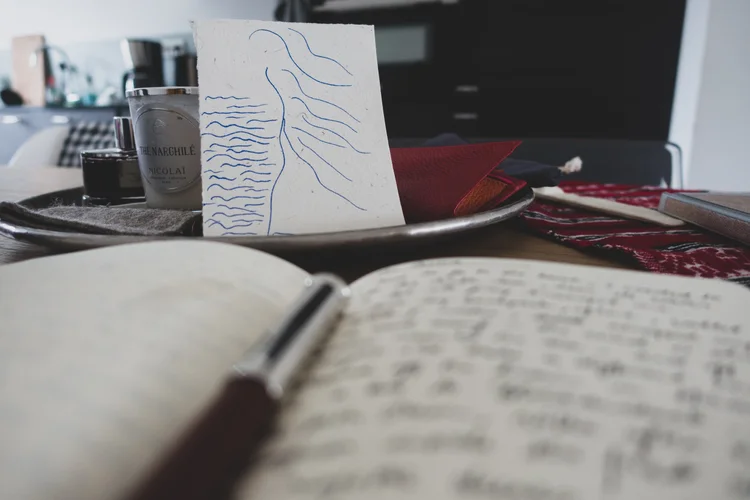
writing in Zeeland (March 2022) |
|
|
|
It isn’t easy to thrive as a writer, a literary translator or as an artist, in a neoliberal society. The system makes sure that you’re in survival mode almost all the time. For more than a decade, I’ve been a successful full time freelancer, linking my artistic and writing practice to communications, programme making or project managing. It has been a blast to be able to work on a wide variety of projects with so many different people, institutions small and big, niche and mainstream. My student work experience has helped me do this well, and it has been the backbone of my work ethics. I have come to realize that my writing and artistic practice were never truly separate from the more practical, income generating projects. The myth we’ve been told is that as a writer or an artist, you need to fully concentrate on your craft if you want to be “successful” (whatever that may mean). It shouldn’t surprise you that I don’t agree with this view, even if for a long time I thought I was chasing that dream: being able to do nothing else but write, for example. But writing and creating are not happening in a vacuum. I have accepted that separating my artistic practice from the economic reality shaping the world we live in, was not realistic, and it was certainly not helping me be the writer I want to be. A lack of stability, not knowing where my next project will come from has of course created immense stress which in turns has impacted not only my mental and physical health but also my artistic work. I have also started questioning why it was that I was working so hard on creating beautiful things for many people, and couldn’t get peace of mind when it came to my (financial) well-being. The system was telling me that all I deserved was precarity, and I believed it. I thought about my earlier years, when I was working weekend shifts in hotels, then going to class Monday mornings. I wasn’t less of a student because I was working. I was more tired, maybe. But I was a student. The same applies for being an artist. But the major shift for me, especially now that I have taken on a new role as an advisor in an organisation whose purpose is to support the arts and culture in the Netherlands, has been that working is not just a way to “sustain” my practice, it is a complete part of how I experience my work as an artist. Part of my vision is to create spaces for makers - artists, writers, literary translators etc. - to tell a wide variety of stories, to enrich their own practices and the narratives we share on societal, historical and cultural topics. This urgency is at the heart of why I write, translate poetry and turn to photography to tell stories. I did not take on a job only for stability, although that is a good enough reason, especially in these difficult times. I did so because I am in a place in my life where I want to do more for the communities and the people in my fields - within culture and the arts in general, and more specifically within the literary world and those working in literary translation. And by doing so, I am also evolving as a maker: I get better at my own craft, I hold space for myself in ways that I did not yet know how to. It is a privilege to be in the position I am in today, yet I do not forget how I got here. And I remember my mother’s advice and embrace the privilege of not having to create to sell, but rather be open for new encounters.
|
|
LISTENING, WATCHING, READING
|
|
Listen to writer Ahdaf Soueif in Desert Island Discs - it’s an old recording (from 2012) but one I like going back to. I see Marina Abramović has recently appeared on the show as well. You can check all episodes online. Read In the Shadow of the Holocaust. How the politics of memory in Europe obscures what we see in Israel and Gaza today by Masha Gessen in The New Yorker. (Gessen explains in an interview on Democracy Now what happened regarding the withdrawal of the Hannah Arendt prize they were going to be awarded in Germany). Watch Anselm by Wim Wenders, a beautiful and poetic documentary about artist Anselm Kiefer. There is currently also an exhibition of his work at the Museum Voorlinden in The Hague.
|
|
|
Fri, Oct 27
Read and listen to issue thirteen of the Attention Span Newsletter, published on 25 October 2023. |
|
|
|
🎙️ an audio version of the attention span newsletter is available on your favourite podcast app: Spotify, Apple Podcasts, Overcast…or to listen on the attention span website.
|
|
ABOUT Canan “Ja’anan” Marasligil (she/they) is a multilingual writer, artist, literary translator, performer, editor, podcaster and cultural programmes curator based in Amsterdam. She established The Attention Span website and its newsletter to publish their work independently: making the time to reflect, analyse and imagine.
|
|
Thank you so much for reading! Feel free to share this newsletter with your friends, on your social media and more. Here’s the link to subscribe: https://theattentionspan.com/subscribe
When quoting or sharing content, make sure to attribute it to the author. Unless otherwise stated, all content (writing, photography, design) created and published in this newsletter is authored by me, Canan “Ja’anan” Marasligil.
|
|
|
|