|
Welcome to issue seven of The Attention Span Newsletter by me, Canan “Ja’anan” Marasligil.͏ ͏ ͏ ͏ ͏ ͏ ͏ ͏ ͏ ͏ ͏ ͏ ͏ ͏ ͏ ͏ ͏ ͏ ͏ ͏ ͏ ͏ ͏ ͏ ͏ ͏ ͏ ͏ ͏ ͏ ͏ ͏ ͏ ͏ ͏ ͏ ͏ ͏ ͏ ͏ ͏ ͏ ͏ ͏ ͏ ͏ ͏ ͏ ͏ ͏ ͏ ͏ ͏ ͏ ͏ ͏ ͏ ͏ ͏ ͏ ͏ ͏ ͏ ͏ ͏ ͏ ͏ ͏ ͏ ͏ ͏ ͏ ͏ ͏ ͏ ͏ ͏ ͏ ͏ ͏ ͏ ͏ ͏ ͏ ͏ ͏ ͏ ͏ ͏ ͏ ͏ ͏ ͏ ͏ ͏ ͏ ͏ ͏ ͏ ͏ ͏ ͏ ͏ ͏ ͏ ͏ ͏ ͏ ͏ ͏ ͏ ͏ ͏ ͏ ͏ ͏ ͏ ͏ ͏ ͏ ͏ ͏ ͏ ͏ ͏ ͏ ͏ ͏ ͏ ͏ ͏ ͏ ͏ ͏ ͏ ͏ ͏ ͏ ͏ ͏ ͏ ͏ ͏ ͏ ͏ ͏ ͏ ͏ ͏ ͏ ͏ ͏ ͏ ͏ ͏ ͏ ͏ ͏ ͏ ͏ ͏ ͏ ͏ ͏ ͏ ͏ ͏ ͏ ͏ ͏ ͏ ͏ ͏ ͏ ͏ ͏ ͏ ͏ ͏ ͏ ͏ ͏ ͏ ͏ ͏ ͏ ͏ ͏ ͏ ͏ ͏ ͏ ͏ ͏ ͏ ͏ ͏ ͏ ͏ ͏ ͏ ͏ ͏ ͏ ͏ ͏ ͏ ͏ ͏ ͏ ͏ ͏ ͏ ͏ ͏ ͏ ͏ ͏ ͏ ͏ ͏ ͏ ͏ ͏ ͏ ͏ ͏ ͏ ͏ ͏ ͏ ͏ ͏ ͏ ͏ ͏ ͏ ͏ ͏ ͏ ͏ ͏ ͏ ͏ ͏ ͏ ͏ ͏ ͏ ͏ ͏ ͏ ͏ ͏ ͏
|
Welcome to issue seven of The Attention Span Newsletter by me, Canan “Ja’anan” Marasligil. I’m a writer, a literary translator, an artist and a curator of cultural programmes based in Amsterdam. Every other week, I take the time to reflect and offer a glimpse of how I see the world through the lens of culture, art, translation, poetry and literature. Each issue has a short essay, a nerdy look at translation, a page from one of my notebooks, a list of things to read, watch or listen to, and a highlight from my archives. If you prefer an audio experience, you can listen to me reading the newsletter to you. You can also support my work via Patreon. Thank you for your presence and attention!
|
|
|
|
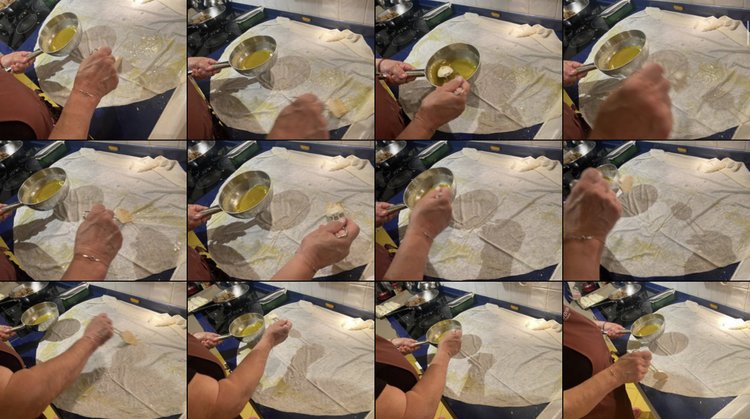
Archiving Börek Making, maternal home Brussels (June 2023) |
|
|
|
I keep everything.
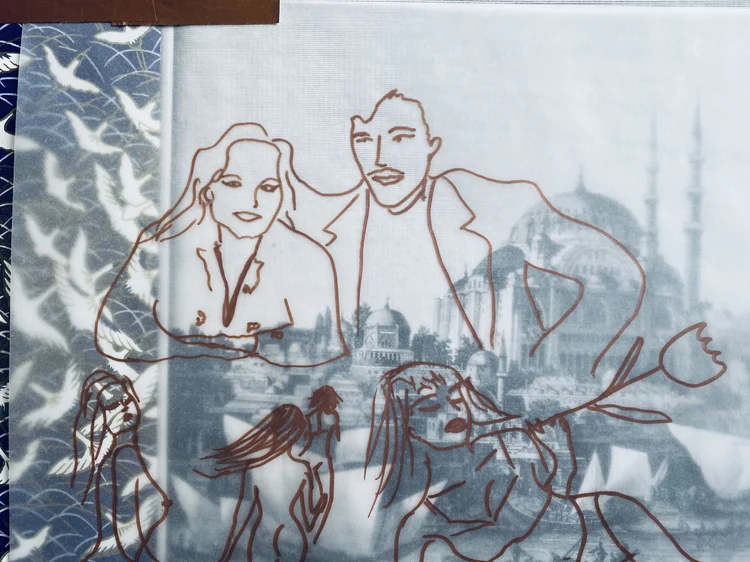
When I was writing my essay on Anne Carson for ExtraExtra magazine last year, I went back into my own archives – my writing and notes on Carson, which I kept since I started studying her work, and of course books. One of those is From Cohen to Carson: The Poet's Novel in Canada by Ian Rae, my professor of Canadian Poetry back in 2002 at McGill University, the person who introduced me to Anne Carson’s work. When I opened Rae’s book seeking guidance, a postcard of a photography by Dutch-Turkish artist Aysel Bodur appeared in between the pages, from the series Family Ties I saw in ART Brussels in 2004. It is an auto-portrait of the artist with her family members: her mother, her uncle and his children, nude in a hammam in Ankara. In the context in which Bodur’s family lives, i.e. Turkey, nudity itself can be an act of crossing border, photographing nudity another one, exhibiting it yet another. Maybe keeping that postcard, which I have recently framed, and putting it atop a shelf visible to all in my living room, is another act of transgression. Of course, being nude in a hammam does not cross a boundary, the hammam’s function is to scrub the skin, cleanse the pores, for which the body needs to be naked in the overwhelming steam. It is a purification ritual where gender is binary; women and men are allowed nakedness but in separate spaces. By bringing the women and men of her family inside this space for purification, Bodur breaks all the boundaries imposed by the society she sets this family portrait in. Would I have forgotten about this photograph if I didn’t keep the postcard the gallery owner had kindly offered me? Maybe my essay would have been different if I didn’t. I keep everything.
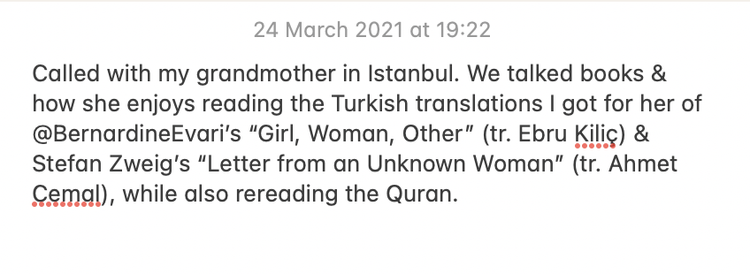
From notes scribbled on scrapped paper, cinema or concert tickets (oh the days when tickets were printed), to flowers I dry between book pages, conversations with my therapist, photographs – printed, saved on the cloud, lost and found in hidden folders, What’s App messages –some of the kind you wouldn’t want your mother to see. Downloaded, screenshot. Printed, collaged. Recorded, kept. I created a large poster size collage of sentences told to me by uncaring lovers. When I cannot write or type, I dictate, I record sounds, I take photographs. In analogue and digital forms. I don’t believe I am alone doing this; we all carry our lives’ stories in the storage capacity of our phones, on the clouds we subscribe to. More giga, more tera. Many bytes of life we keep. Some of us don’t think much about it though (maybe you’re one of them?). I do. I keep everything. And I constantly think about it, obsessively holding on to every single record I create on purpose. I am an archivist of my own life. And not only for myself, but also because I believe my narratives – constructed, imagined, inherited, rejected, embraced – deserve to be archived and therefore found and explored, now and later. Browsing through my notes app on my newly set up computer, which I have bought among others for the purpose of building my digital archives (a grand-scale project I have been thinking about for years now), I came across this note from 2021: Called with my grandmother in Istanbul. We talked books & how she enjoys reading the Turkish translations I got for her of @BernardineEvari’s “Girl, Woman, Other” (tr. Ebru Kiliç) & Stefan Zweig’s “Letter from an Unknown Woman” (tr. Ahmet Cemal), while also rereading the Quran.
|
|
|
|
Screenshot 2023-08-01 at 18.32.54 |
|
|
|
I lost my grandmother in September 2022 and I am still grieving her absence. Judging from my using Bernadine Evaristo’s Twitter handle, this note was obviously a tweet I kept (mistrusting my Twitter archive, even if I did request and download an archive of my 21.6K tweets since March 2007, important ones deserve to be written down elsewhere as keepsake). Reading the note more than two years later, I am reliving that conversation with my grandmother. I reach for my miniature Quran which I had found in her library in Istanbul after her funeral. I keep it near me at all times. Is keeping an archive an act of love or a disillusioned gesture to fight against mortality? What would our memory be without an archive? Is it the archive that is beautiful and filled with layers of emotions, or the construction of it? Rereading that note, I realize that archives remind us that we are aching. They are the depths of who we are, and once we start digging into them, try to tame them through categories, filing, back-ups, storage, media libraries, lists and catalogues, they strike back. A reminder of what matters, as you ask yourself: why did these moments exist in the first place? How and why are they remembered? Can memory be trusted without the existence of an archive? “Your past is a tool, not a definition” writer Maurice Carlos Ruffin recently shared in a recent issue of his newsletter Sitting in Silence. I screenshotted the quote on the newsletter then wrote the sentence down with one of my fountain pens, and I pinned the paper to a wall I look at every day. An archival gesture reflecting how I translated the statement into an emotion. So maybe archives are just that, a tool. They help me build and imagine my own narrative, in relation to my history, my heritage, to those who were actors in my story and who made me who I am today. On a photograph, in a video, on a note, in the memory of a flower I dried, they exist in my life and imagination, in my artistic practice and in my existence. They help me build many definitions of who I am and want to be.
|
|
|
|
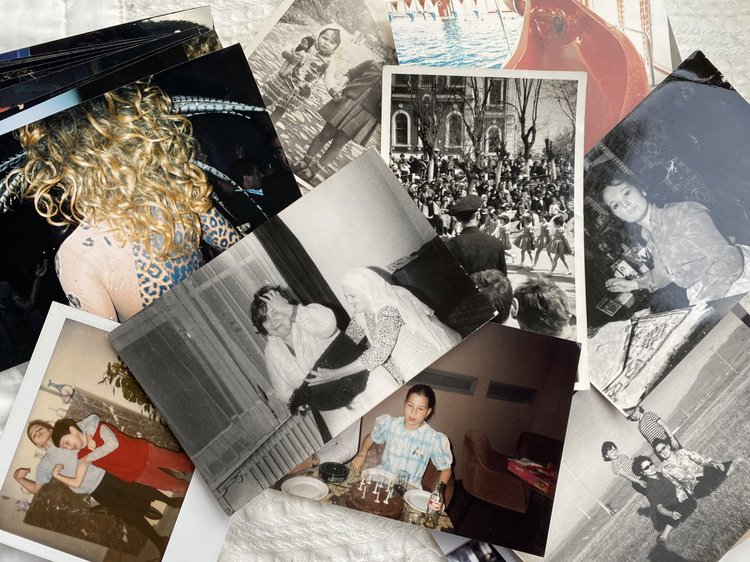
Family archives (photographed in 2022) |
|
|
|
Since we’re on the archives subject, let me share more about a translation project I’ve been involved in since April 2023, called Archival Textures, focusing on publications including reports, flyers and posters, essays… from a variety of activist feminist and queer groups from the 1970s and 1980s in The Netherlands. It’s been a very different kind of approach than translating literary works – whether fiction or non-fiction, or poetry. In this case, the language, vocabulary and terms used in the source language, in that time period, need to be translated with a similar vocabulary in the target language. So, I have been working from Dutch to English, and I have been learning a lot of new (now obsolete) vocabulary, but most importantly, seeing how intersectional and queer practices have been omnipresent within many of the activist groups for a long time, only the vocabulary was different. This made my task challenging (and therefore exciting). For example, terms such as intersectionality or pride week (some texts were mentioning “homo-week” in Dutch, homo in this context and language not being derogatory. I was tempted to translate as pride week but at that time, it wasn’t call like that. I went for “gay week”).
This kind of translation work comes with immense editorial work, including footnotes and introductions, numerous comments in the margins throughout the process. All this data is extremely valuable, very nerdy also, so I had a lot of pleasure translating for this project. The results will be published in magazine format from September on. Now, let’s get nerdy and let me share one specific example: In a text about a gay man explaining why he is reclaiming the word “faggot”, he uses the word “gevoelsgenoten” which I personally came across for the first time. Doing research I found out a definition: "Gevoelsgenoot - mede-lesbienne, veel gebruikt in de jaren vijftig. Vooral in de contactadvertenties van het COC-blad werd om een gevoelsgeno(o)t(e) gevraagd." It is a term dating back from the 1950s used by gay people to refer to fellow gay people (other definitions I found include both the word gay and lesbian). So, in my translation, I offered several options, I am copying my comments to the editors below: Other options I found via the The Queen’s English: The LGBTQIA+ Dictionary of Lingo and Colloquial Expressions (2021) by Chloe Davis (p. 127): “fellow fruits” Fruit: Used to refer to a gay man, but can be used to identify a lesbian, bisexual, transgender, and/or other queer individual.
I don’t know which one fits best to be honest, that’s a decision to be made collectively with the editors. And this is one of the reasons why I love translation so much. Also: Translation is time travel!
|
|
LISTENING, WATCHING, READING
|
|
Listen: A conversation “What kind of language are we left with” held between Mirene Arsanios and Celina Su, recorded in February 2021 for the Invitation to Species Podcast. The poets, both “motherless mothers without mother tongues,” discuss the lineages of their languages, liminal subjectivities and the impossibility of “we” in light of differentially distributed access to resources. Together, they consider how our social relations are being rewritten and disrupted in a time of ongoing crisis and disaster. Read: Poetry again! And since I mentioned a podcast she was on, let me recommend Celina Su’s poetry collection Landia (2018), which I had come across to in the unique and fragile bookshop Perdu in Amsterdam. You can read one of Su’s poetry on the Poetry Foundation website. Watch: I was very sad to hear about Jane Birkin’s death two weeks ago, aged 76 (and then we lost Shuhada' Sadaqat – aka Sinead O’Connor, aged 56, which was another shock). When a famous person dies, commemorative documentaries, articles and all sorts of content come out. ARTE TV is broadcasting this documentary about Birkin from 2019, by Clelia Cohen. It’s poignant to watch now after we know she is gone.
|
|
A PAGE FROM ONE OF MY NOTEBOOKS
|
|
|
|
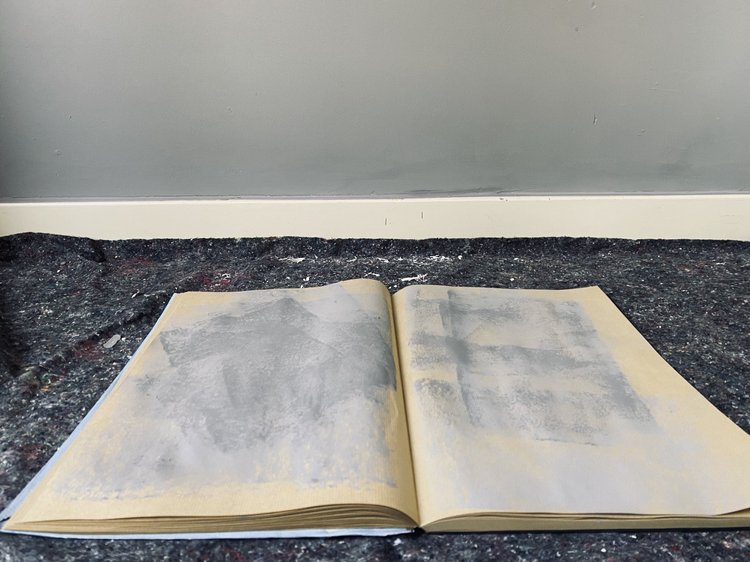
Archiving the colour of the wall I painted into my sketchbook (July 2022) |
|
|
|
(now you understand better why in every issue, I do have a section to share a piece from my online archives :))
|
|
🎙️ an audio version of the attention span newsletter is available on your favourite podcast app: Spotify, Apple Podcasts, Overcast…or to listen on the attention span website.
|
|
ABOUT Canan “Ja’anan” Marasligil (she/they) is a multilingual writer, artist, literary translator, performer, editor, podcaster and cultural programmes curator based in Amsterdam. She established The Attention Span website and its newsletter to publish their work independently: making the time to reflect, analyse and imagine.
|
|
Thank you so much for reading! Feel free to share this newsletter with your friends, on your social media and more. Here’s the link to subscribe: https://theattentionspan.com/subscribe
When quoting or sharing content, make sure to attribute it to the author. Unless otherwise stated, all content (writing, photography, design) created and published in this newsletter is authored by me, Canan “Ja’anan” Marasligil.
|
|
You can support my work for 3 € a month via my Patron page.
|
|
|
|