|
THE ATTENTION SPAN a monthly invitation for reflection, analysis and imagination by writer, literary translator and artist, canan marasligil. issue 36|san francisco diary (part 2) if you haven’t read
|
issue 36|san francisco diary (part 2)
|
|
if you haven’t read it yet, here is part 1
|
|
|
|
visions from San Francisco bay, February 2025 |
|
“[T]he majestic expanse of the Pacific seacoast has imperceptibly worked its way into my dreams, remaking me, stripping me down, and perhaps thereby liberating me.”
|
|
Czesław Miłosz writes in “Facing Too Large an Expanse”, one of the many short essays I’ve been devouring from Visions from San Francisco Bay (translated by Richard Lourie). Written in 1969, the book offers reflections on exile, identity, and the landscapes of California. I found a 1982 edition at Browser Books on Fillmore Street—one of those serendipitous moments when you stumble upon the perfect expression of your own emotions in someone else’s art. Visions has been my companion throughout my journey in San Francisco. Czesław Miłosz (1911–2004) was a poet, writer, translator, and diplomat who primarily wrote poetry in Polish. He won the 1980 Nobel Prize in Literature. Miłosz survived the German occupation of Warsaw and later served as a cultural attaché for the Polish government. When authorities threatened his safety, he defected to France and eventually chose exile in the United States. In 1960, he became a visiting lecturer at the University of California, Berkeley.
|
|
|
|
visions from San Francisco bay, February 2025 |
|
|
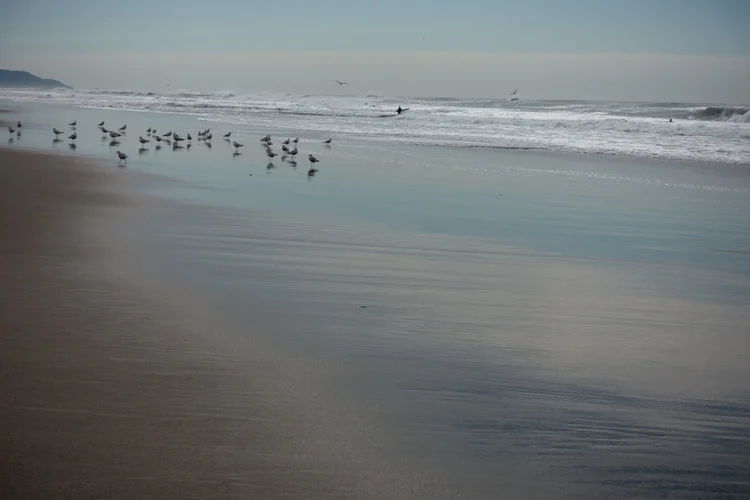
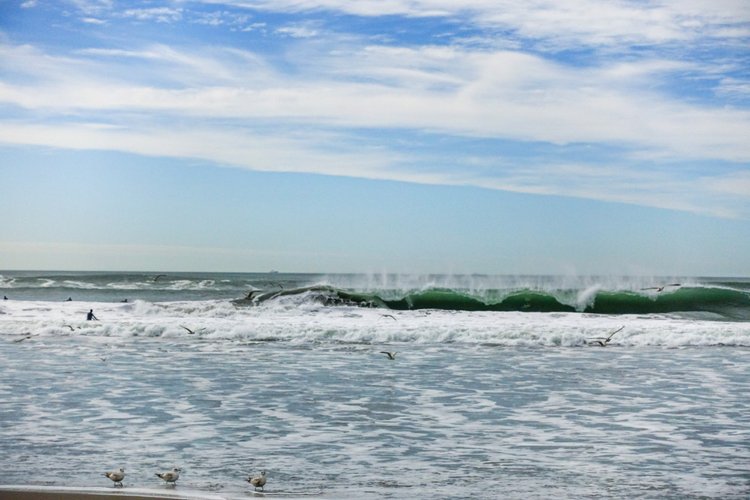
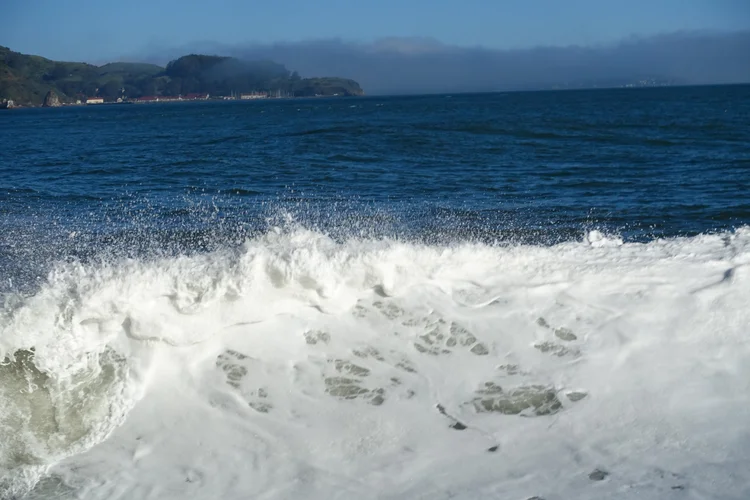
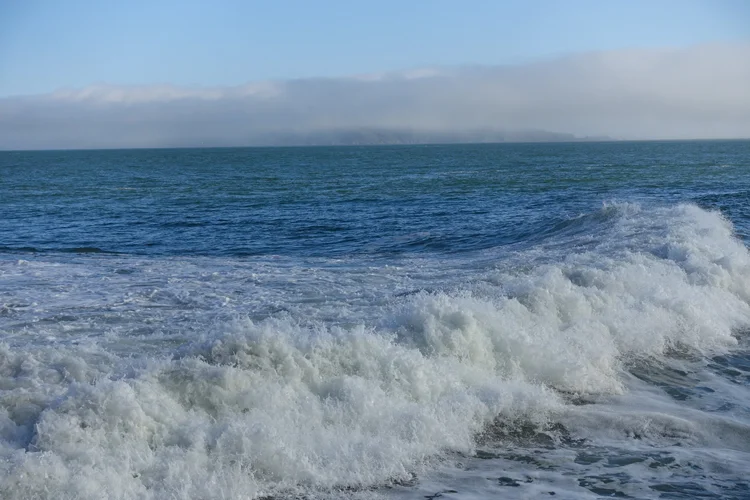
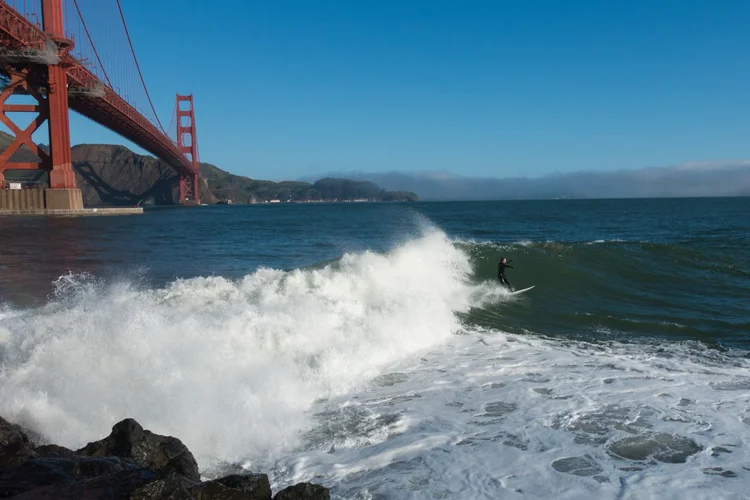
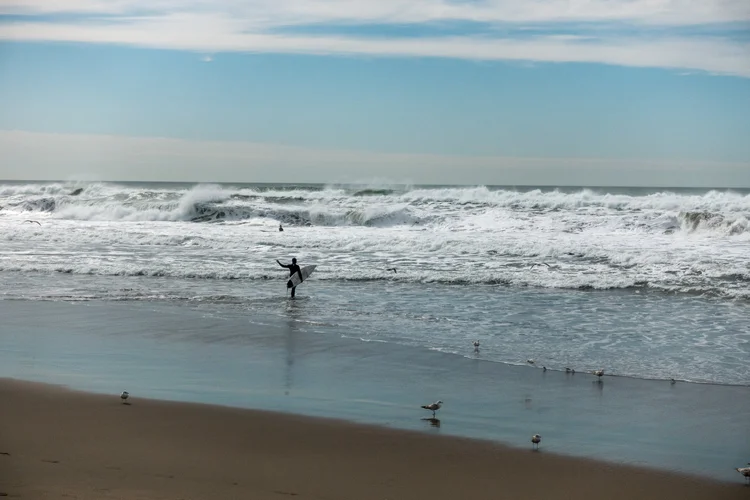
Just like Miłosz, I feel it is impossible to write about California without describing the ocean—how the sun’s rays and waves stretch across the sand like brushstrokes, painting it in shades of blue; how, as she opens her mouth to carry and swallow surfers, the ocean lets us glimpse her emerald green, hidden in the depths like a pearl inside a shell. Our eyelids open and close too slowly—the wave has already disappeared. Light reflects differently here. I have seen many stunning marine landscapes across the world, and don’t forget, I am a lover of the North Sea. But just like Miłosz, I found another kind of liberation gazing at the Pacific Ocean from the California coast.
|
|
|
|
visions from San Francisco bay, February 2025 |
|
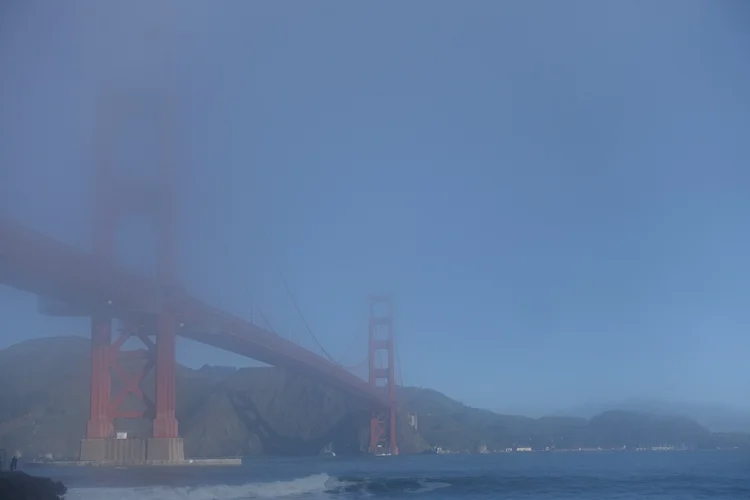
”At daybreak, the fog below is a stormy, swirling plain. The sun rises, the fog breaks, and the waters of the bay appear, the outlines of the islands and headlands, sheaves of sky-scrapers. Dew drips from the pines, hummingbirds can be heard whirring in the bushes by the window. The traffic on the roads and bridges increases, a glimmering multitude of microscopic points. Then I, too, join everyone rushing in pursuit of their goals and I become part of the great operation.”
|
|
This is how the short essay “Migrations” begins—just as my own day began on my way to cross the Golden Gate Bridge toward Muir Woods (another magical place I will write about later in this series). The famous San Francisco fog was present, casting her beauty over landscapes that had shaped my imagination, one movie scene after another. Everything feels familiar, and yet none of this is mine. It is not my heritage; I have no roots here. And maybe that is why I love it so much—because I yearn to settle in a place where I have no past.
|
|
|
|
visions from San Francisco bay, February 2025 |
|
|
In the essay titled “Where I Am” Miłosz writes: “The human imagination is spatial and it is constantly constructing an architectonic whole from landscapes remembered or imagined ; it progresses from what is closest to what is farther away, winding layers or strands around the single axis, which begins where the feet touch the ground.”
|
|
I mentioned the paradoxes of the U.S. in the first part of my San Francisco Diary series, and when you stand in this geography, with your feet touching its ground, that is when the emotions both inspire and overwhelm you. After decades of dreaming and imagining this place, I was finally here—breathing in the sharp wind, soaked in a sunshine so golden it could make you forget all the sins this place has held in order to exist.
|
|
|
|
visions from San Francisco bay, February 2025 |
|
|
On a Thursday afternoon, I visited the de Young Museum, nestled inside the immense Golden Gate Park. There, I saw a Mark Rothko painting—Untitled (1948)—created a year after he spent a summer teaching at the California School of Fine Arts (later the San Francisco Art Institute). The painting’s palette of yellow, pink, and orange hues evokes the distinctive quality of light in the San Francisco Bay Area, while the prominent green square suggests the verdant landscapes of Northern California, as well as themes of springtime, renewal, and the natural cycles of life. I was struck by how different this palette was from most of his famous works (at least those I knew), yet it was still immediately recognizable as a Rothko. I stood in front of the painting for several minutes, feeling a deep connection between this interpretation of a Californian landscape and Etel Adnan’s paintings, also inspired by this same geography—something I will explore further in a future chapter of this series. And, after all, these artists—Rothko, Miłosz, Adnan—were migrants, hyphenated Americans who, in one way or another, shaped not only the artistic canon of this country but left their mark far beyond its borders.
|
|
|
|
visions from San Francisco bay, February 2025 |
|
|
I left the city behind and cycled through Golden Gate Park, passing a lake, a bison herd, pines and palm trees, and a windmill at the foot of a tulip garden planted in honour of a Dutch queen. I paused by the American animals but ignored the garden—after all, I had crossed the ocean to escape the familiar. Crossing the avenue, I passed antifascist and Free Gaza graffiti on the wall separating the road from the beach. It wasn’t so unfamiliar after all. But this kind of familiarity—I can find myself in. There’s a song that’s been playing on my Spotify discover weekly, as if the algorithm read my mind and soul. It goes like this:
|
What holds your hope together
Make sure it's strong enough
When you reach the end of your tether
It's because it wasn't strong enough I was going to drown
Then I started swimming
I was going down
Then I started winning
|
|
A band I had never heard of, called The Sound. It isn’t a particularly original song, nor a very creative band name, but the music is catchy—melodramatic enough, with lyrics that perfectly match my state of mind and geographical location. The feeling of drowning—or more accurately, suffocating—I have been experiencing for a long time, especially in relation to the political climate of our so-called Western democracies. I am still fascinated and disturbed by the fact that, in my attempt to escape the toxic discourses of an extreme-right-governed Netherlands, I chose another democracy lost to fascism to feel free in.
|
|
|
|
visions from San Francisco bay, February 2025 |
|
|
I’m like the surfer who welcomes the wave; we know we won’t tame it—only that, for a brief moment, the wave will carry us until we fall back into the water, swimming back to the shore, to start over. Again, and again, and again. I wonder, if I lived in this geography, would I become a surfer? After all, I have been travelling to the other side of the world to chase a dream that only promises to be ephemeral (I don’t dare call it false, nor will I utter the word nightmare). California dreaming—though as unpredictable as a gigantic wave of the Pacific Ocean—is capable of carrying you, just as it is capable of swallowing you. Inside this paradox, I turn back to Czesław Miłosz and the very first paragraph of the book I had read inside the bookstore, which made me decide, in a heartbeat, to buy it:
|
“I am here. Those three words contain all that can be said— you begin with those words and you return to them. Here means on this earth, on this continent and no other, in this city and no other, and in this epoch I call mine, this century, this year. I was given no other place, no other time, and I touch my desk to defend myself against the feeling that my own body is transient. This is all very fundamental, but, after all, the science of life depends on the gradual discovery of fundamental truths.”
|
|
*Visions from San Francisco Bay by Czesław Miłosz, translated by Richard Lourie (Farrar, Strauss & Giroux, 1983).
|
|
|
|
visions from San Francisco bay, February 2025 |
|
|
🔜 stay tuned for the third part of my San Francisco diary, which I will send in two weeks (on 2 April 2025) instead of waiting until next month. I hope you enjoy it 💛
|
|
A FEW THINGS THAT MAKE ME THINK AND FEEL…
|
I’ve been listening to St Vincent’s latest album All Born Screaming, with the song “Broken Man” on repeat (and good news, she’s coming to Utrecht on 7 July). I have finally seen Anora and loved the film! Sean Baker is truly a wonderful filmmaker (remember The Florida Project or Tangerine). I am so happy Mikey Maddison got the Oscar for best actress, it is much deserved, and I won’t say more except invite you all to see this gem of a film. And there’s a Turkish TV series on Netflix I like very much called Mezarlik/Graveyard. The graveyard refers to the dark basement where a special unit works to solve femicides. Commissioner Önem (played by the amazing Birce Akalay) is constantly fighting against patriarchal norms protecting gender-based violence.
|
|
ABOUT + SUPPORT Canan Marasligil (she/they) is a writer, literary translator and artist based in Amsterdam. She established the attention span website and its newsletter to publish their work independently: making the time to reflect, analyse and imagine. thank you so much for reading! you can support the attention span by contributing as much as you’d like between 2,50 € and 25 € via this pay pal link.
|
|
Sharing is loving 🖤 Here’s the link to subscribe: theattentionspan.com/subscribe
When quoting or sharing content, please credit the author. Unless otherwise stated, all content (writing, photography, design) created and published in this newsletter is authored by Canan Marasligil.
|
|
|
|