|
THE ATTENTION SPAN an invitation for reflection, analysis and imagination by writer, literary translator and artist, canan marasligil. issue 47| translating the uçurum The Ancient City of Chellah, Rab
|
issue 47| translating the uçurum
|
|
|
|
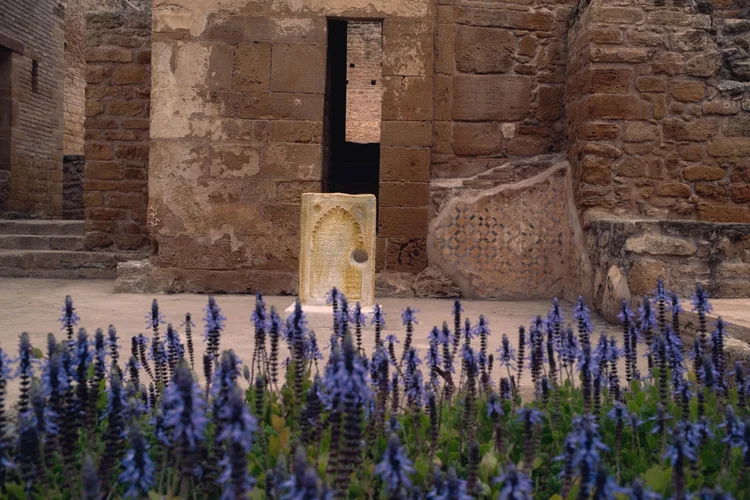
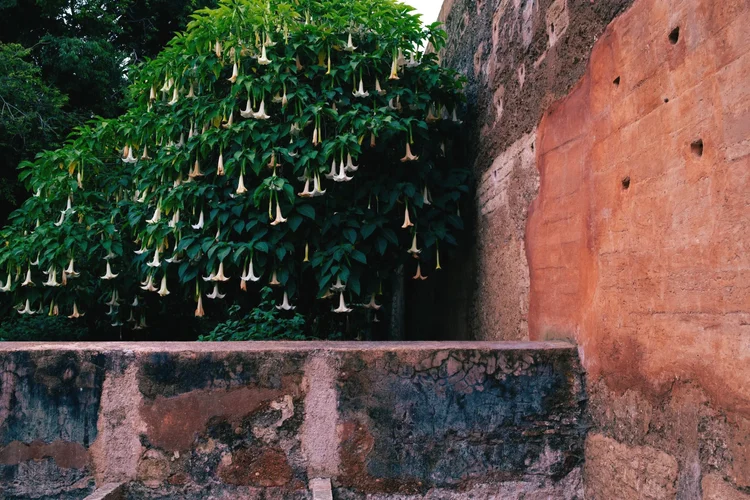
The Ancient City of Chellah, Rabat, April 2026 |
|
|
Google gathers the data for me: "depending on the context, here are the most common English equivalents" for the word uçurum: "Abyss / Chasm: A deep, immeasurable gulf or crack in the earth. Cliff / Precipice: A steep, high face of rock. Metaphorical Gap: A wide divide or disparity between two things." uçurum returns regularly in conversations with a dear friend who, like me, not only thinks and studies decolonisation but embodies it. The first uçurum we name together is the one between bodies: those who experience and remember, and those who only read about the experience and the remembrance. The Nişanyan dictionary tells me that uçurum comes from a Middle Turkish word meaning "a deep slope, a place to fall into." One search leads to another, and in this linguistic quest I find myself inside the thing I am trying to name: looking into the many definitions of uçurum, watching it deepen.
|
|
|
|
The Ancient City of Chellah, Rabat, April 2026 |
|
|
I look into the emptiness and I see bodies falling: BIPOC, queer, disabled bodies, bodies of lived experience trying to think and create new discourses and practices, bodies carrying rituals that could save us all. On the other side of the uçurum, those who have built a fence. They can see us: resisting, falling. They observe, analyse, and recreate narratives that exclude us every single day, carving us further into an identity based on othering. We want to destroy the fence so that we might at least aspire to fill in the uçurum. But power has a way of never letting go. That is how empires were built, lives and cultures destroyed, systems put in place to keep the precipice as wide as possible. The gap is not metaphorical. It creates pain in all of us, daily. On a recent trip to Morocco I visited Tangiers. Late in the evening I was walking through streets filled with families, children, couples, groups of friends — people of all ages eating on terraces, sitting in public squares, a buzz and energy I realised I had been so hungry for — when I saw a young man carrying a kitten in his arms. Surrounded by a group of friends, he was walking around with a warm smile that invited tenderness. I think of him every day, with joy and immense pain. Joy for the beauty he brings to the world; pain because I imagine that same body here, in the Netherlands, and how it would have been robbed of that joy, and us of its tenderness, by the reality constructed around the existence of brown and Black bodies in Western Europe.
|
|
|
|
The Ancient City of Chellah, Rabat, April 2026 |
|
|
In the Netherlands, a young Moroccan man will always be demonised. That identity is fixed in stigmatising language: "Marokkaanse-Turks jongeren", the Moroccan Turkish youth, as though we were a single unit, as though there were not a multiplicity of countries, languages, histories, rituals and cultures across our geographies. We are one unit here: one to hate, and if possible to get rid of. Let us all fall into that uçurum, for all they care. That is how violent political discourse is here, and that same violence is perpetrated in subtler registers across institutions, academia, media, and culture. An essay recently published in a Dutch literary journal proves exactly this. My existence is a balancing act at the edge of the uçurum. One step too far and I may disappear. I cannot fill it in, and if I try to build a bridge — which I have spent my whole life doing — it is my existence alone that risks falling into that abyss. What is the point of a bridge if what awaits on the other side is a fence? If my humanity is not recognised in the crossing. If you cannot imagine us walking with kittens in our arms across your cities built on centuries of violence and pain. I think of the young man with his kitten. I want to dwell in the softness of that existence, in the possibility of such tenderness in public space. I wish I could invite us all to dream of returning that tenderness to our discourses, our knowledges, our imaginations. But the uçurum is too wide, too deep, too dark. And it is not one I created. So why should I be the one to repair it? Instead, I return to one of my languages. At the root of uçurum is the word uç: in Old Turkish, it can mean "to fall, to die." But it also means "to fly, to travel through the air, to take flight." It has given us the word uçmak: to fly. Better than bridges: flying. To keep moving through the world, our imaginations wide open, alive to a young man carrying a kitten through the streets of Tangiers. Translating that possibility into all geographies.
|
|
|
|
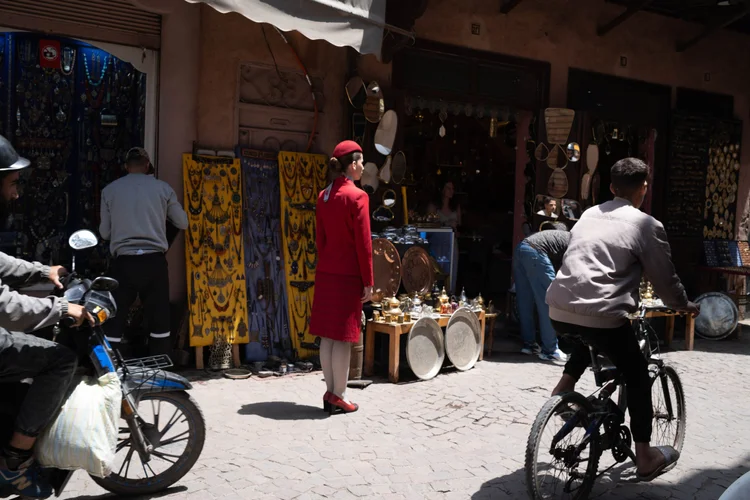
Filming a Turkish Airlines ad in Marrakesh, April 2026 |
|
|
A FEW THINGS THAT MAKE ME THINK AND FEEL… black morning glory. a time for decolonial listening by M.A. van Tulder & E.A.E. Evans, a beautiful riso printed book published by Roots to Fruits (an independent publisher I urge you to explore). Considering the artistic research around some of the oldest kruidboeken (herbal) in the Netherlands by artist M.A. van Tulder, researcher E.A.E. Evans works through the history of science and botany, defined by patriarchal capitalism, to offer a contemporary way forward. The richly illustrated volume - featuring plants, herbs, and their medicinal properties - is a unique epistemological construction that has contributed to the exploitation of nature. Through Rolando Vázquez's notion of decolonial listening, this essay asks readers: what could a decolonial herbarius, visually and discursively, be like today?
Unlearning Routines of the Impossible, a new book co-authored by Annette Krauss, featuring contributions from the Feminist Search Tools working group, Yolande Zola Zoli van der Heide, Nancy Jouwe, KUNCI Study Forum & Collective, and Ferdiansyah Thajib. The book begins with the question: What are the struggles, entanglements, and joys of practicing unlearning in predominantly Western contexts? It responds to this question through revisiting the artistic research projects Sites for Unlearning, (co-) initiated by the artist. The sites are experimental gatherings where the aim is to collaboratively unlearn dominant forms of thinking and doing, and the affective production of impossibilities within institutions in order to intervene in social injustices. The publication weaves together artistic projects, invited essays, collective conversations, and scenes, creating a support structure for practicing unlearning.
Statues also breathe is a collaboration between Obafemi-Awolowo University, 108 students from all across Nigeria, and the families of the Chibok girls who were kidnapped by Boko Haram in 2014. Inspired by the iconic terracotta heads of Ife, it was initiated by artists Prune Nourry and Ade Bantu, the installation seeks to raise awareness on the plight of the missing girls, and to highlight the diversity of Nigerian culture. It is a powerful exhibition, accompanied by a documentary film, on show at the Macaal, the Museum of African Contemporary Art in Marrakesh. The rest of the museum is a transversal exploration of the collection via seven "contours" – attitudes or strategies that unfold across the museum's rooms, focusing on the key poetic, political, and technical concerns of contemporary African practices: Decolonize, Transcribe, Initiate, Cohabit, Converge, Promise, Weave, (as well as Connect, a room that offers an in-depth look at the long history of contemporary African art from Independence to the present day). Proposed by Morad Montazami and Madeleine de Colnet of Zamân Books & Curating, each of these seven performative verbs serves as an invitation to visitors to engage individually and collectively with these significant issues. A must-visit if you’re in Marrakesh: Macaal.org
|
|
ABOUT + SUPPORT Canan Marasligil (she/they) is a writer, literary translator and artist based in Amsterdam. She established the attention span website and its newsletter to publish their work independently: making the time to reflect, analyse and imagine. thank you so much for reading! you can support the attention span by contributing as much as you’d like between 2,50 € and 25 € via this pay pal link.
|
|
Sharing is loving 🖤 Here’s the link to subscribe: theattentionspan.com/subscribe
When quoting or sharing content, please credit the author. Unless otherwise stated, all content (writing, photography, design) created and published in this newsletter is authored by Canan Marasligil.
|
|
|
|