|
THE ATTENTION SPAN a monthly invitation for reflection, analysis and imagination by writer, literary translator and artist, canan marasligil. issue 46|there is life beyond what we see there is life be
|
issue 46|there is life beyond what we see
|
|
|
|
there is life beyond what we see, Amsterdam, January 2026 |
|
|
In Littérature et Révolution, writer Joseph Andras and writer and sociologist Kaoutar Harchi invite us into a nuanced and caring 240-page conversation on the role of political engagement in literature. The exchange starts with the premise that all writers are engagés, only some writers’ political engagement is to the world as it is, while others’ lies in changing it, with varying degrees of success. It fascinates me that the English translation of the French word “engagé” requires the addition of the word “politically” to convey the same meaning. In engagé, the political dimension is inherent. Yet, as the writers highlight, political engagement isn’t always directed toward social justice and equality. Toward the end of the book, Andras and Harchi turn to the ethics of publishing: what it demands and what it offers. Why being published matters, but also how unpublished work should matter just as much. Harchi writes that we should list our unfinished books in the bibliography of our published books. “A bibliography is a terrible thing,” she says, explaining that it resembles a distant finish line: we only consider and value the books that have managed to cross it. We reward the strongest books. The books that have survived. But there are all the others, she goes on further: “Sometimes they were just a title. Sometimes just a page. But they still did something. They supported the structure of the oeuvre. They nourished future books at the cost of their own demise. These books, poor ones, are like clandestine beings who must not be spoken about. We must not mention them because no institution has christened them. There’s no anointment, no ISBN number...” (my translation).
|
On devrait inscrire nos livres inachevés dans la page bibliographique de nos livres publiés. C'est terrible, une bibliographie: c'est comme une ligne d'arrivée très lointaine et on ne tiendrait en considération, en respect, que les livres qui seraient parvenus à la franchir. C'est une forme de prime aux plus forts des livres. A ceux qui ont su se maintenir en vie. Mais il y a tous les autres livres. Qui parfois n'ont été qu'un titre. Parfois qu'une page. Mais qui, pourtant, ont fait quelque chose. Ont soutenu la structure de l'œuvre. Ont nourri les livres à venir au prix de leur propre fin. Ce sont des livres, les pauvres, qui sont comme des clandestins: il ne faut pas en parler. Pas les citer car aucune institution ne les a baptisés. Aucune extrême-onction, aucun numéro ISBN...
|
|
|
|
there is life beyond what we see, Amsterdam, January 2026 |
|
|
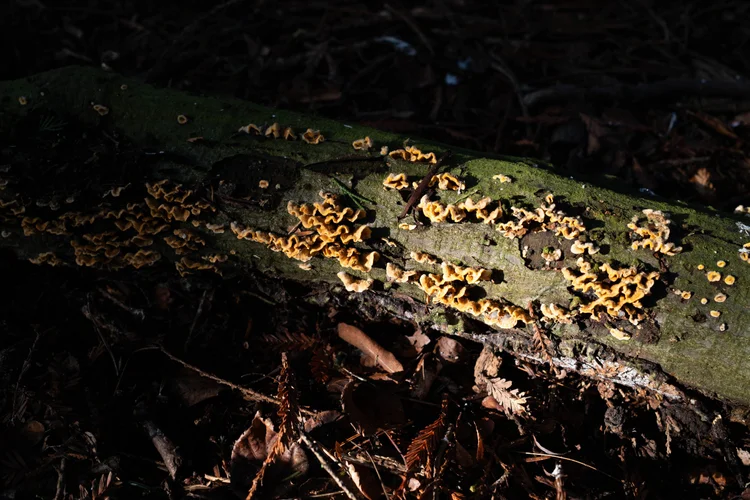
My oeuvre goes back decades, of writing, translating, thinking, sharing knowledge, creating discourse. It cannot be catalogued within the classic definition of a bibliography. Much of what I have created has remained behind the scenes, and yet has had an immense impact on my own work and on the lives and work of others. Conversations that led to institutional decisions. Translations that supported larger causes. A living archive of notebooks and documents that fostered curiosity and shaped an understanding of the world, sustaining and carrying an artistic discourse. An engagement with the world. Not always visible, but always present. When we define an oeuvre—or the right to visibility within a bibliography—in purely product-oriented terms, we fall into a liberal and capitalist conception of what critical discourse and imagination should be. This idea, I feel, runs counter to any meaningful notion of freedom. Quantifying an oeuvre numerically may help us see how productive an artist, writer, or literary translator has been, but can it be the sole measure of its worth? What do we do with the rest of the work? Is there not also life beyond what we see? In the contexts we inhabit, not all voices have the same right to visibility. Being published, displayed in a bookshop window, or featured on the front page of a major magazine or newspaper is far from guaranteed. And those who reach such spaces sometimes pay a high, invisible cost. Not all narratives are presented or received equally. As the newly appointed Poet Laureate of the Netherlands, Nisrine Mbarki Ben Ayad writes in her first publication in this role, on the front page of the Dutch newspaper NRC:
|
la parole heeft een prijs
dans toutes mes langues
اللي ما فهمكش خسرك
|
|
What Kaoutar Harchi highlights is a call to make our work visible on our own terms: to include our unfinished books in our bibliographies, just as Mbarki Ben Ayad places invisibilised languages on the front page of a national newspaper, making visible the lives that exist beyond what is seen. Changing the world begins with redefining our worth and our work.
|
|
|
|
there is life beyond what we see, Amsterdam, January 2026 |
|
|
A FEW THINGS THAT MAKE ME THINK AND FEEL… Freddie: the Final Act is a poignant documentary directed by James Rogan about Freddie Mercury’s last years, during the horrific period of the AIDS pandemic that took so many lives. The documentary not only focuses on the lead singer of Queen but also reminds us of the terrible stigma imposed on gay men in society and political discourse, fuelled by ignorance, bigotry and homophobia. Whether you like Queen’s music or not, the film tells a larger story we should never stop telling. The documentary is available to watch on the Dutch app NPO. I am one of those who loved Hamnet, Chloé Zhao’s exquisite film, co-written with Maggie O'Farrell, the author of the novel on which it is based. Actors Jessie Buckley and Paul Mescal are deeply moving. The story explores complex emotions in such a profound and nuanced way. The main character Agnes’s connection with nature, and the celebration of witchcraft through her and her late mother, spoke to me. Maybe because women in my own family posses such gifts… The film has divided many critics, and honestly, I don’t care much for the cynics. The music by Max Richter is also, as always, perfect. And while everyone is busy being disappointed about the latest film adaptation of Wuthering Heights, which I don’t think I’ll go see in the cinema, I want to invite you to listen to this wonderful cover of Kate Bush’s song “Wuthering Heights” by Cécile McLorin Salvant. I’ve been thinking a lot about our relationship with digital technology; at what cost we use it, and how. Paris Marx, author of the Disconnect platform proposes guidance on how to leave US tech, and in doing so offers a lucid reflection on what that means in our daily lives, ethically, and practically, and on the kinds of challenges it brings. I am trying to slowly move away from US tech, but it isn’t easy. I have started using Vivaldi as a browser, and that alone has completely shifted how I access information. I’m sticking with it for now, even though it’s challenging. Still, I am so far from being independent from US tech: I still use Gmail, Google Drive, Apple products… I have an Instagram account for my City in Translation publishing platform. There’s no single way to approach this, but Paris’s website is a good place to start if you’re considering moving away from US tech. Even if it’s one tool at a time.
|
|
ABOUT + SUPPORT Canan Marasligil (she/they) is a writer, literary translator and artist based in Amsterdam. She established the attention span website and its newsletter to publish their work independently: making the time to reflect, analyse and imagine. thank you so much for reading! you can support the attention span by contributing as much as you’d like between 2,50 € and 25 € via this pay pal link.
|
|
Sharing is loving 🖤 Here’s the link to subscribe: theattentionspan.com/subscribe
When quoting or sharing content, please credit the author. Unless otherwise stated, all content (writing, photography, design) created and published in this newsletter is authored by Canan Marasligil.
|
|
|
|