|
Welcome to issue ten of The Attention Span Newsletter by me, Canan “Ja’anan” Marasligil.͏ ͏ ͏ ͏ ͏ ͏ ͏ ͏ ͏ ͏ ͏ ͏ ͏ ͏ ͏ ͏ ͏ ͏ ͏ ͏ ͏ ͏ ͏ ͏ ͏ ͏ ͏ ͏ ͏ ͏ ͏ ͏ ͏ ͏ ͏ ͏ ͏ ͏ ͏ ͏ ͏ ͏ ͏ ͏ ͏ ͏ ͏ ͏ ͏ ͏ ͏ ͏ ͏ ͏ ͏ ͏ ͏ ͏ ͏ ͏ ͏ ͏ ͏ ͏ ͏ ͏ ͏ ͏ ͏ ͏ ͏ ͏ ͏ ͏ ͏ ͏ ͏ ͏ ͏ ͏ ͏ ͏ ͏ ͏ ͏ ͏ ͏ ͏ ͏ ͏ ͏ ͏ ͏ ͏ ͏ ͏ ͏ ͏ ͏ ͏ ͏ ͏ ͏ ͏ ͏ ͏ ͏ ͏ ͏ ͏ ͏ ͏ ͏ ͏ ͏ ͏ ͏ ͏ ͏ ͏ ͏ ͏ ͏ ͏ ͏ ͏ ͏ ͏ ͏ ͏ ͏ ͏ ͏ ͏ ͏ ͏ ͏ ͏ ͏ ͏ ͏ ͏ ͏ ͏ ͏ ͏ ͏ ͏ ͏ ͏ ͏ ͏ ͏ ͏ ͏ ͏ ͏ ͏ ͏ ͏ ͏ ͏ ͏ ͏ ͏ ͏ ͏ ͏ ͏ ͏ ͏ ͏ ͏ ͏ ͏ ͏ ͏ ͏ ͏ ͏ ͏ ͏ ͏ ͏ ͏ ͏ ͏ ͏ ͏ ͏ ͏ ͏ ͏ ͏ ͏ ͏ ͏ ͏ ͏ ͏ ͏ ͏ ͏ ͏ ͏ ͏ ͏ ͏ ͏ ͏ ͏ ͏ ͏ ͏ ͏ ͏ ͏ ͏ ͏ ͏ ͏ ͏ ͏ ͏ ͏ ͏ ͏ ͏ ͏ ͏ ͏ ͏ ͏ ͏ ͏ ͏ ͏ ͏ ͏ ͏ ͏ ͏ ͏ ͏ ͏ ͏ ͏ ͏ ͏ ͏ ͏ ͏ ͏ ͏ ͏
|
#10 / On Curating Literary Programmes
|
|
Welcome to issue ten of The Attention Span Newsletter by me, Canan “Ja’anan” Marasligil. I’m a writer, a literary translator, an artist and a curator of cultural programmes based in Amsterdam. Every other week, I take the time to reflect and offer a glimpse of how I see and feel the world through the lens of culture, art, translation, poetry and literature. Each issue has a short essay or some thoughts, a nerdy look at translation, a page from one of my notebooks, a list of things to read, watch or listen to, and a highlight from my archives. If you prefer an audio experience, you can listen to me reading the newsletter to you. You can also support my work via Patreon. Thank you for your presence and attention!
|
|
THE ESSAY ON CURATING LITERARY PROGRAMMES
|
|
|
|
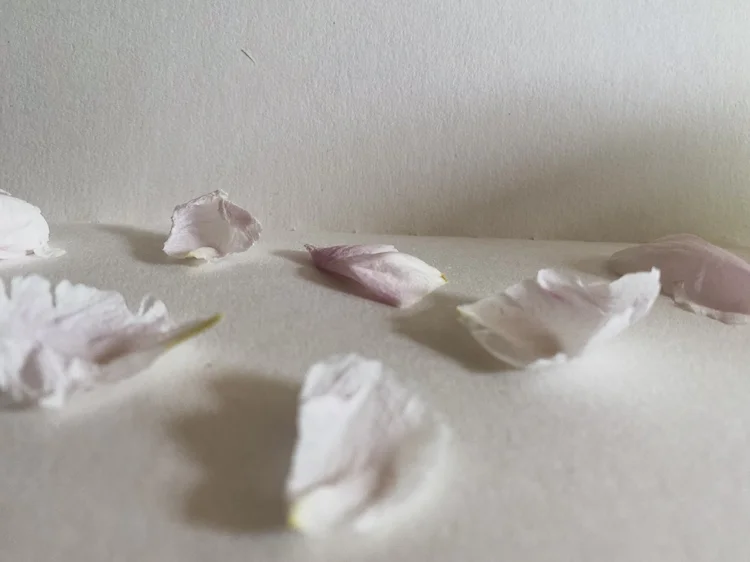
petals - pages, Amsterdam (June 2023) |
|
|
|
Why do we want to experience literature outside of a book? Literature – whether it is fiction, non-fiction, poetry, graphic novels... that is, anything printed as a book (or designed as an eBook or an audiobook), is meant to be read (or listened to), usually on our own and if possible, away from distractions. Reading is a solitary act. But for many of us, this solitude is followed by a yearning to share the stories that moved us with others. We organise book clubs, we post on social media, we send messages to our friends about that book they must read too. And many times, we also want to meet the writers of these books and hear more about how they think about the world, to dive deeper into the themes they tackle in their fiction or non-fiction, we want to know why it matters to them (because it matters to us). We want to know about their process and get behind the scenes of their writing. We love literature, we love culture, so it is in our nature to be curious about who makes it and why.
In one of her letters published in Frantumaglia (translated by Ann Goldstein), talking about keeping her identity secret, Elena Ferrante writes “I wrote my book to free myself from it, not to be its prisoner.” (p.59) This is a valid point if you look at how much is expected from writers nowadays, from media appearances to social media presence and constant performances at festivals and cultural venues. One of my passions is inviting writers on a performative space I curate, and yet, I can understand and respect Ferrante’s view, especially if we place her discourse inside today’s media savvy world where the success (in the capitalist sense) of a book is determined by how much media attention it gets (the irony of me using a best-selling author like Ferrante to illustrate this point is not lost on me, but this paradox is intriguing, and it is good to remember she has been published in Italy since the early 1990s and had chosen to remain anonymous from the very start).
|
|
|
|
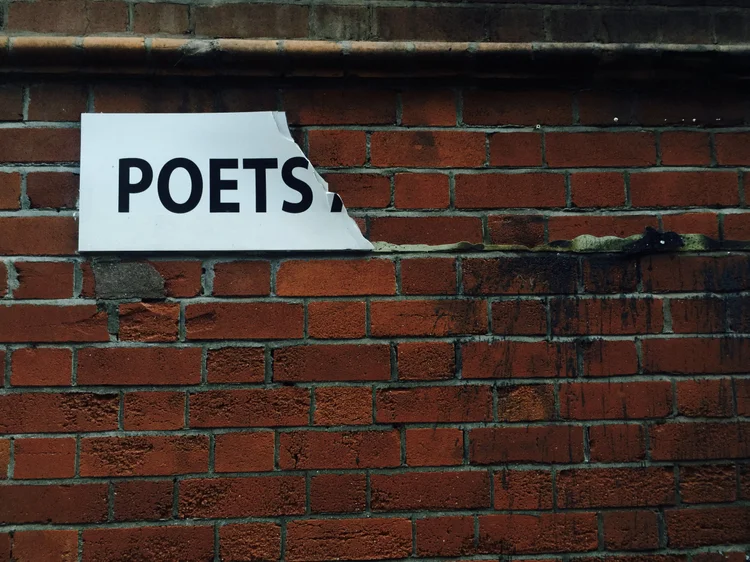
window reflection, Amsterdam (May 2023) |
|
|
|
Throughout the collection of letters, Ferrante asks very interesting questions about the role of media in literary landscapes, and even discusses how literature is also often politicized (a subject for another essay). I have never read any of Ferrante’s novels, so I cannot tell you whether I like her fiction or not, but I am fascinated by the mind and depth of thinking she shares throughout these archives going back as far as 1991. In a letter on media hierarchies, she writes: “Is a book, from the media point of view, above all the name of the person who writes it? Is the fame of the author or, rather, the author personality who takes the stage thanks to the media, a crucial support for the book? Isn't it newsworthy, for the cultural pages, that a good book has been published? Is it newsworthy, instead, that a name able to say something to editorial offices is on the cover of some book or other?” (p. 46) A “famous” author on a stage will attract a general audience and therefore create ticket (or book) sales, is a common understanding of what literary programming has become in this challenging economic and political context where government funding of the arts and libraries has been drastically cut for more than a decade, sometimes even longer, in many Western European countries. This has had damaging effect on everyone involved in literature and culture. And where funding exists, people who have started working in these industries because they have an artistic vision have been often pushed to turn into entrepreneurs. It is no longer about the collective experience but about how many tickets we can sell, and we fall into the trap of believing that readers only want what the media dictates they should like. In another interview, Ferrante writes: “I come out into the open every time I publish something, even just the answers in this interview of yours. It seems to me sufficient. Otherwise I don't know what there is to discover. Words that become public belong to everyone. That one attributes them to this person or that is their fate. On the other hand, doesn't someone who reads one of my books make space in his own vocabulary for my words, doesn't he appropriate them, if necessary doesn't he reuse them? Books belong to those who have written them only when their cycle is complete and no one reads them anymore.” (p. 188)
And this is the part that interests me as a curator of literary programmes, the essence of why I think the collective experience of literature matters. Before being a curator, I am a reader. I interpret works of literature inside a socio-economic, cultural, and political context where I access them, in the moment I engage with them. Then there’s the extra layer of my own biography: my own vocabulary, as Ferrante puts it. The programmes I curate reflect this subjectivity and passion.
I use the term “programme” purposefully as it includes a variety of definitions (from activity to broadcasting) which suits how I look at how I curate literature for different spaces connecting with an audience, and most importantly, it etymologically fits what I aim to do: the word comes via late Latin from Greek programma, from prographein ‘write publicly’, from pro ‘before’ + graphein ‘write’. Curating literary programmes, to me, is all about interpreting and feeling works of literature and the discourses of their authors on the public sphere, and creating spaces where a collective experience is possible. Since I first started to do this at the comics festival I co-created in Istanbul, to my time at the Free Word Centre in London where I thought of ways to link literary translation and freedom of expression, to Europalia in Belgium where I focused on contemporary writers from Turkey, and since 2018 at Read My World International Festival, and more recently at SLAA (Foundation for Literary Activities in Amsterdam). The first question to me is never: how famous an author is. Nowadays this is such an irrelevant point of view as someone or some work can be well known by one group of people, and not at all by another. The subjectivity of fame is created by a system that keeps feeding itself, and any media that cares about culture and literary criticism should try to answer the questions Ferrante asks in the quote I shared at the start of this essay. What I seek when I bring writers, artists, poets, or musicians together is first and foremost connection. The format of how this happens can change depending on a variety of factors, from the location, the budget to the theme. Every programme requires careful thinking about how the makers will be able to feel free and use the stage on their own terms, and how the audience can receive it. We may live in a world that wants us to believe fame and ego are what people are after when they buy a ticket to a literary event, but in its essence, most of us cares about a collective experience offering the possibility to connect: with others, with ourselves, and with literature. I was recently reminded of the etymology of the word curator: From Latin cūrātor “one who has care of a thing”, from cūrāre “to take care of”. The role of a curator is to care. I would also add to trust. In our own vision, in the writers’ we invite to take on the stage and in the readers. Why do I want to experience literature outside of a book? I want a connection built on trust, curiosity and care, which will guide us towards a collective experience worthy of the literature we read in our solitude. Citations from: Elena Ferrante. Frantumaglia. A Writer’s Journey. (Translated by Ann Goldstein) Europa Editions, 2016.
|
|
Welcome back inside my translator’s brain! This issue I am sharing one line from a poem by Karin Karakaşlı (yes, again!), together with a literal translation with notes: Yaren olursun şehirli gecelerde
You will be your own wound on nights filled with cities
(şehirli also sounds like sihirli which means “secret”, so maybe there’s a play here with city nights where she tries to also make us think of secret nights? Nights filled with secrets? But I may be overinterpreting) Another note on the word yare – which with the suffix n, yaren, means “your yare”: the word yare comes from Persian and means “wound”, but it is used when the wound is on the heart, so not a physical wound, it is rather used to describe a spiritual wound that opened in the heart.
(aren’t we all melodramatic folks!) And one more note on using Persian vs Farsi when talking about the language: I had this conversation with Iranian friends and they did confirm to me that in English, the language is called “Persian”. Farsi is how it is said in Persian. Using “Farsi” when speaking English, would be like saying, “nederlands” instead of “Dutch”, “français” instead of “French”, “türkçe” instead of “Turkish” (ex: I speak nederlands, I learn français, or I speak türkçe with my mother).
|
|
LISTENING, WATCHING, READING
|
|
Listen: Serpentine Podcast: Intimacies considers many forms, ideas, and understandings of intimacy. Host Gaylene Gould gathers perspectives from artists, designers, writers, thinkers, and others on how we can rekindle trust, and open ourselves up to new possibilities for connection. I was particularly touched by a reminder in the first episode, of the etymology of the word “curate”, which in its essence means “to care” (as I mention in my essay above). Read: Culture Strike: Art and Museums in an Age of Protest by Laura Raicovich. Since I’m talking about curating in this issue, I am sharing this book, in which Raicovich, a former director of the Queens Museum in New York, shows how art museums arose as colonial institutions bearing an ideology of neutrality that masks their role in upholding capitalist values. And she suggests how museums can be reinvented to serve better, public ends. There are lots of US specific cases, but most of the book can also speak to many of us working in different geographical and political contexts, it spoke to my vision as a curator of literary programmes, on many levels. Watch: Dichter bij Onze Coloniale Erfenis/Closer to Our Colonial Heritage (in Dutch with English subtitles) is a programme series featuring poets, writers and spoken word artists accompanying the exhibition Our Colonial Heritage on show at the Tropenmuseum in Amsterdam. They offer powerful and poignant reflections on colonial heritage and how colonialism affects our bodies, hearts, minds, relationships, life, and work. How this heritage belongs to all of us. I had the immense pleasure and honour to host one of the conversations after a performance by one of the poets, Nisrine Mbarki, and I have also translated the poems/performances of Nisrine and Joshua Timisela for these videos, made by the amazing Beyond Walls Collective, in partnership with the Tropenmuseum and Read My World.
|
|
A PAGE FROM ONE OF MY NOTEBOOKS
|
|
|
|
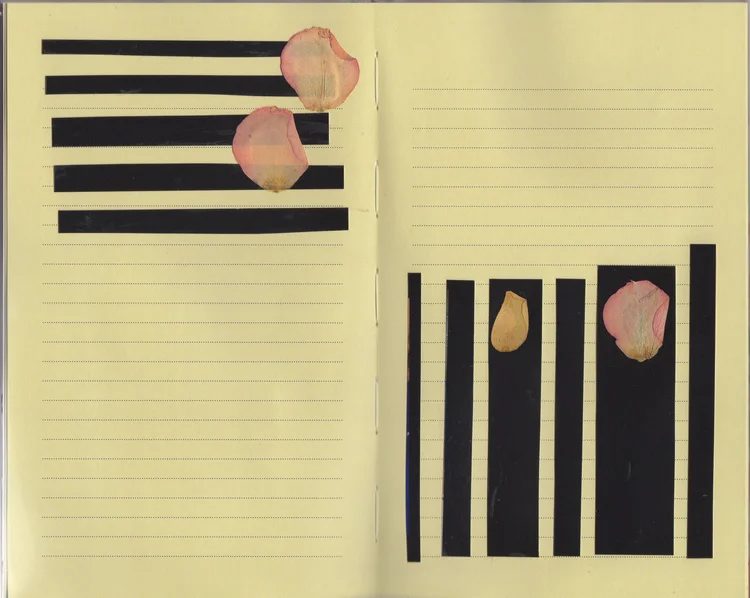
a definition of translation (imperfect symmetry), 2019 |
|
|

|
Read and listen to issue two of the Attention Span Newsletter, published on 24 May 2023. |
|
|
|
🎙️ an audio version of the attention span newsletter is available on your favourite podcast app: Spotify, Apple Podcasts, Overcast…or to listen on the attention span website.
|
|
ABOUT Canan “Ja’anan” Marasligil (she/they) is a multilingual writer, artist, literary translator, performer, editor, podcaster and cultural programmes curator based in Amsterdam. She established The Attention Span website and its newsletter to publish their work independently: making the time to reflect, analyse and imagine.
|
|
Thank you so much for reading! Feel free to share this newsletter with your friends, on your social media and more. Here’s the link to subscribe: https://theattentionspan.com/subscribe
When quoting or sharing content, make sure to attribute it to the author. Unless otherwise stated, all content (writing, photography, design) created and published in this newsletter is authored by me, Canan “Ja’anan” Marasligil.
|
|
You can support my work for 3 € a month via my Patron page.
|
|
|
|