|
THE ATTENTION SPAN a monthly invitation for reflection, analysis and imagination by writer, literary translator and artist, canan marasligil. issue 38|san francisco diary (part 4) read part 1, part 2
|
issue 38|san francisco diary (part 4)
|
|
|
|
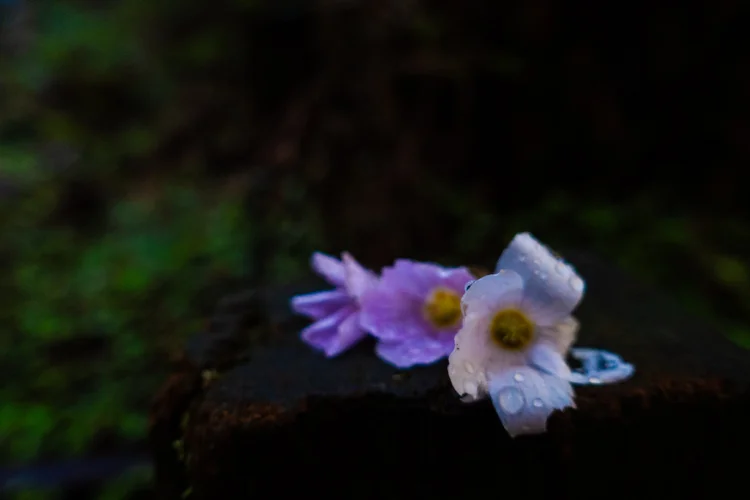
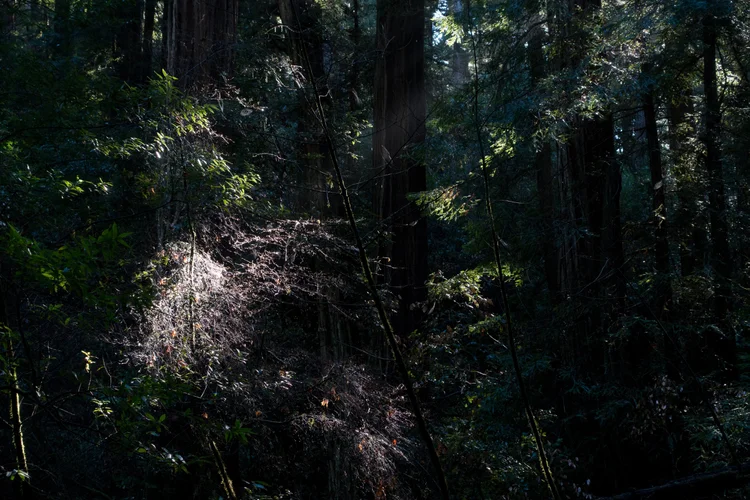
That's how the light gets in, Muir Woods, February 2025 |
|
|
It is in California that Etel Adnan started to write and paint in leporellos. In the early sixties, the poet and painter left Lebanon “by running all the way to California. An exile, which lasted for years,” she writes in In the Heart of the Heart of Another Country (City Lights Books, 2005), a haunting exploration of identity, history, displacement, and war from an Arab American perspective. California, for Adnan, was not just a destination, but a space where thoughts could unfold like a leporello—accordion-like, nonlinear, alive. The more I write about California, the more I realise my ongoing fascination with the United States of America has always been fed by stories of migration and exile. The pursuit of the American dream to me meant the freedom to move beyond one’s identities while being elevated and nurtured by their complexity and multiplicity. Maybe that is why I am drawn to the artists, writers and poets who embody such movement. And maybe that is why despite the horrific political climate the country is facing right now, I still have hope for a more equal and kind future, because I believe in the migrants and exiled, past and present, who’ve been inhabiting the country, and moreover in the Native American people, who have been violently pushed into the margins of their own land and history. How does one love a place built on so much violence, is a question I keep reflecting on.
|
|
|
|
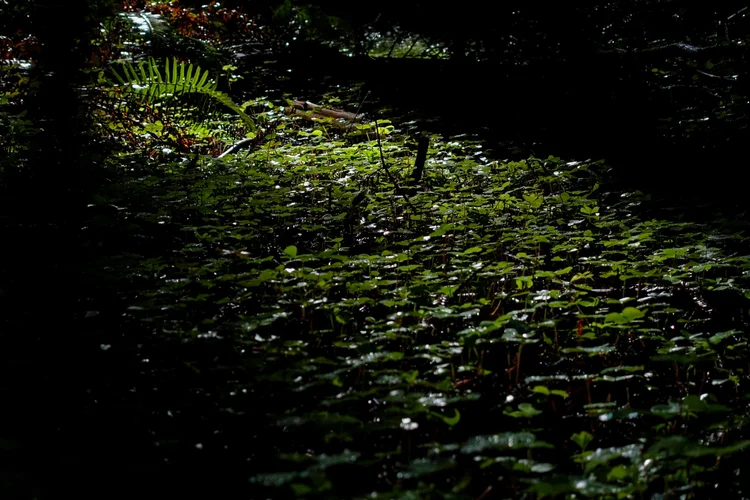
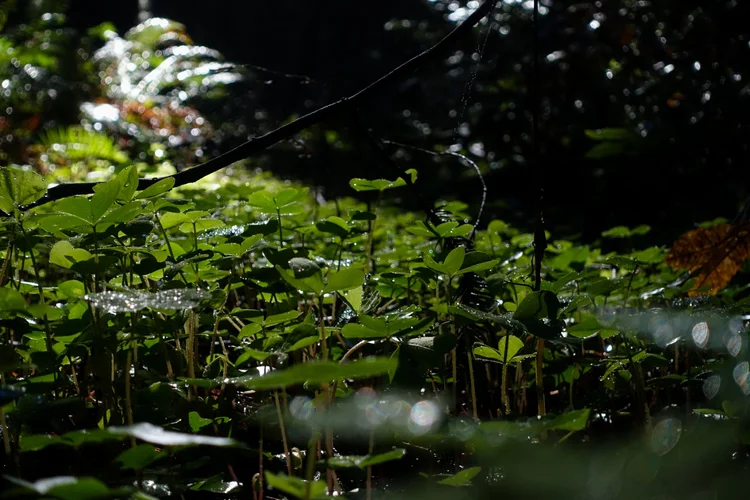
That's how the light gets in, Muir Woods, February 2025 |
|
|
In her essay The Unfolding of an Artist Book (1998), Etel Adnan tells of her encounter with Rick Barton, an opium-smoking, almost-mythic figure who spent his life drawing in San Francisco cafés. Not sketching for recognition, not even calling himself an artist—but “writing” with his brush, as he put it. Faces, fingers, smoke, life flowing across the pages of accordion-folded books like a visual diary of the city’s soul. Adnan recalls: “He refused to be called an artist when he showed me his working materials. "I am just drawing", he said, and then he added: "I am not a painter but a writer. One day in Peking I was sitting on the main square drawing a chrysanthemum and a little boy stopped close, looked at what I was doing, and told his father: 'Look, He is writing a chrysanthemum'. He was right. I am a writer." In this encounter, Rick hands her one of his unfinished books, unlocking a new way of thinking for Adnan: about materials, form, rhythm, and the relationship between word and image. She began to create her own leporellos—writing poetry in Arabic script, blending ink, colour, and verse in a way that wasn’t illustration but something more like a conversation. Word and image as equivalents, not explanations. The format of the leporello itself became part of the experience—a journey in time, like music or memory. Like translation, really. Adnan writes about the act of making as something sacred, almost ritualistic, where the paper, the brush, the light, even her mood all had to be in tune. It’s not just about expression—it’s about the medium becoming a co-author, a collaborator in the unfolding of thought. Format, attention, and process shape meaning.
|
|
|
|
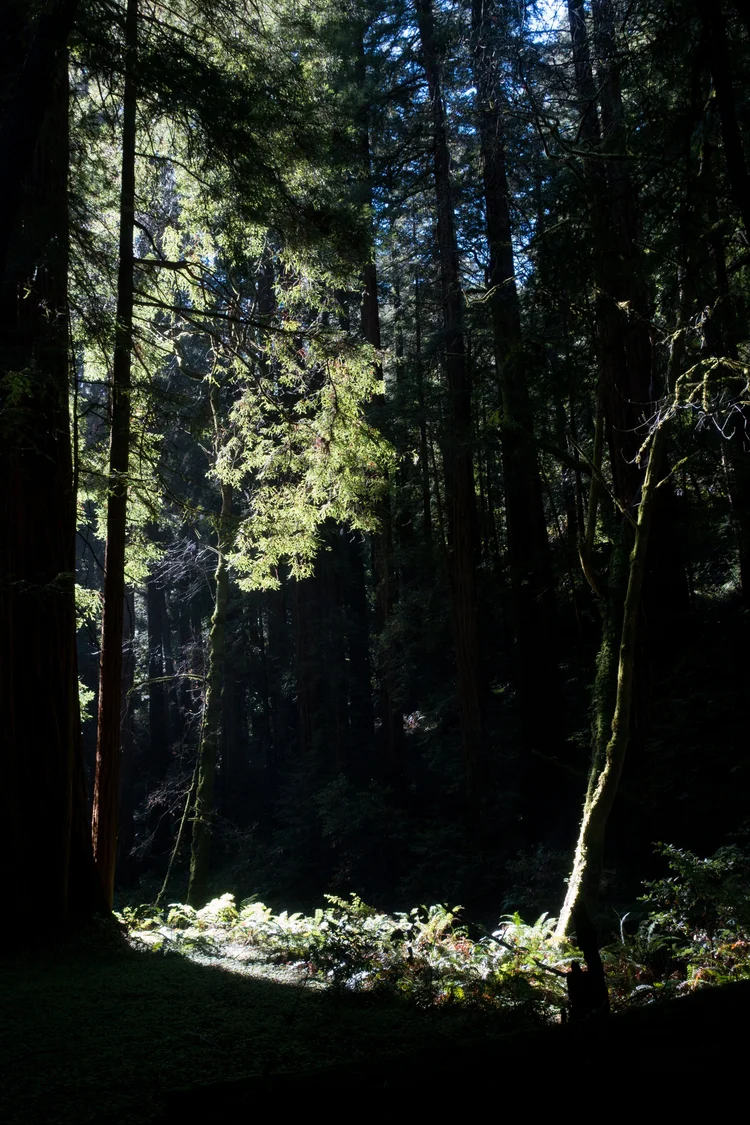
That's how the light gets in, Muir Woods, February 2025 |
|
|
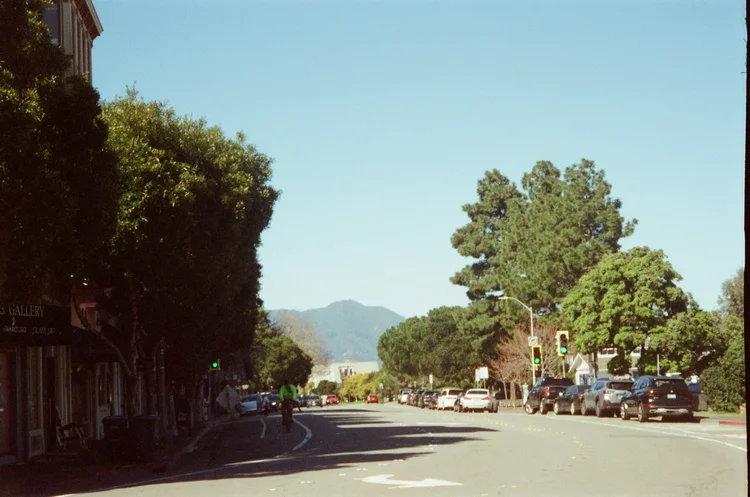
Reflecting on her return to Lebanon, Adnan writes that “One does not return to one's country of origin after a long absence without bringing back some glory, and some damage. I was constantly alarmed by what I was perceiving in an environment both old and new to me. California was on my mind, working like a filtering device. My references belonged to two worlds, and were forcing me to shift gears, so to speak, to be mobile, edgy, and, most of all, vulnerable. I was used to a world now remote and, at the same time, getting used to a new one that was also my old world, and somewhere, deep inside, I was alien to both.” As I traced her steps between worlds, I found myself walking into my own moment of clarity in California. The day I went to visit Muir Woods is the day I saw Mount Tamalpais for the first time, it was also the day I have captured Etel Adnan’s beloved mountain with my late grandmother’s analogue camera. In Journey to Mount Tamalpais, Adnan reveals her deep connection to the Northern California icon. The work is generously paired with illustrations by Adnan and explores the importance of nature as an element of thinking, perception, and identity. “The Indian called the Mountain Tamal-Pa, “The One close to the Sea.” The Spaniard called it Mal-Pais, “Bad Country”! The difference between the native and the conqueror is readable in these two different perceptions of the same reality. Let us be the Indian and let be! What is close to the sea shall remain close to the sea.” And she goes on: “The pyramidal shape of the mountain reveals a perfect Intelligence within the universe. Sometimes its power to melt in mist reveals the infinite possibilities for matter to change its appearance. I watch its colors: they always astonish me. When it is velvet green, friendly, with clear trails, people and animals are invited to climb, to walk, to breathe. When it is milky white it becomes the Indian goddess it used to be: a huge being with millions of eyes hidden beneath its skin, similar to the image of God I used to have in my childhood days. When it is purple, it radiates.”
|
|
|
|
That's how the light gets in, Muir Woods, February 2025 |
|
|
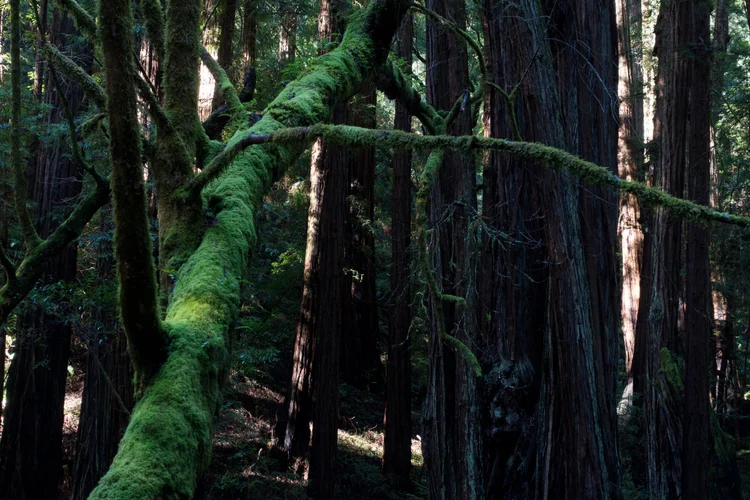
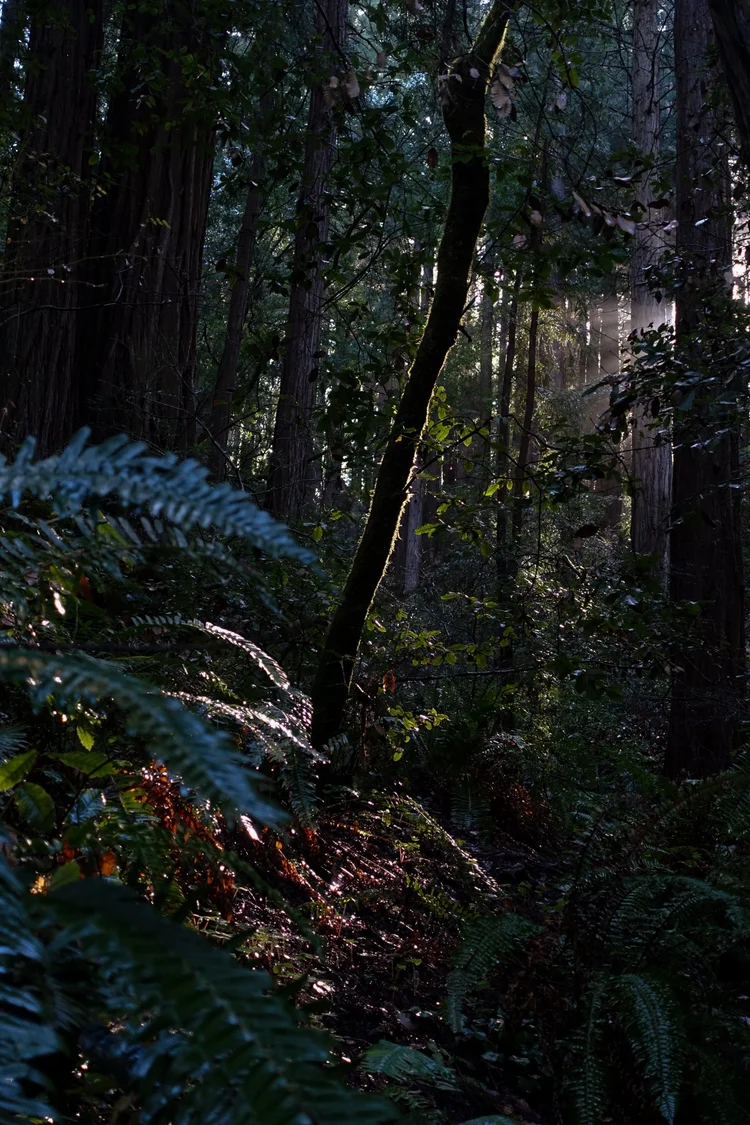
California is a land of colours that capture one’s imagination in a way I have not experienced with other beautiful places on the planet. The moment I step foot on Californian soil, I understood why Etel Adnan painted Mount Tamalpais over and over and over… in the many colours the way she did over the years, in California as well as in and out of exile. Encountering the redwoods in California was an experience like no other. As I entered Muir Woods, I felt deeply alive—not just intensely, but in a layered, embodied way, as if nature’s beauty had awakened something within. There was something unmistakably spiritual about being among the redwood trees, like they were quietly holding centuries of wisdom. Even the sun seemed to be asking permission to pose its rays on their beings and those they are protecting. Such humility transforms how you perceive light and makes you understand what enlightenment is supposed to entail. What moved me most was learning how the trees survive: not alone, but through their interconnectedness. Their roots don’t go deep, but they stretch wide, intertwining with those around them—holding each other down through storms, nourishing their young, even supporting unrelated neighbours. They grow in these beautiful, circular formations called “fairy rings,” born from a parent tree, and when that tree is gone, the ring lives on—connected, resilient, and still giving. Strength doesn’t always come from standing tall alone, but from being held up by a community. This, I say to myself, is the America I love. Not just the nature but our capacity—as artists, writers, poets, translators... but also just as wanderers, to exist in its beauty.
|
|
|
|
That's how the light gets in, Muir Woods, February 2025 |
|
|
While wandering the de Young Museum in San Francisco, a superb painting caught my eye—rich in purple, green, and ochre. An oil painting titled Rhapsody (2002) by Richard Mayhew (1924-2024). Born in a coastal town on Long Island, near the Atlantic Ocean, Mayhew experienced firsthand the complex interplay of water, earth, and sky. He also gained a deep appreciation for nature from his Native American grandmother, who, he has said, taught him "nature lore, ways, and attitudes." The painting reflects those various harmonies – both in colour and within his identities, and this work in particular reflects the essence of California in a way I have also experienced it. The museum recognizes the violence Native American populations have experienced on an introduction placard titled Facing History: “The encounters between Indigenous people and European American settlers and how it shaped the history and cultural production of what is now the United States, and marked the beginning of romanticized and stereotyped European American representations of Native Americans. Critical reflections on the past, provoked by many of the objects displayed here, include contending with the complex and problematic aspects of California's history.” Prior to European colonization in 1542, Native Californians, including the Ohlone peoples, flourished in the region. The Spanish Colonial era commenced in 1769, resulting in the forced relocation and conversion of Native populations. The population suffered decline due to the harsh conditions imposed by the missions. California attained statehood in 1850, drawing settlers during the gold rush; however, Native American sovereignty and lives were significantly affected by state-sponsored genocide and forced assimilation.
|
|
|
|
That's how the light gets in, Muir Woods, February 2025 |
|
|
Representation, visibility and acknowledgment matter. It may not be enough, but these are steps towards justice I want to celebrate. The Fine Arts Museums of San Francisco occupy unceded land of the Ramaytush Ohlone, who are the original inhabitants of what is now the San Francisco Peninsula. The greater Bay Area is also the ancestral territory of other Ohlone peoples, as well as the Miwok, Yokuts, and Patwin. Many American museums practice land acknowledgment through their communications, online and on site. A land acknowledgment is “a statement that formally recognizes and pays respect to the Indigenous peoples of a place. “Indigenous” is a general term that refers to the first inhabitants of a region. A land acknowledgment is a public recognition that is intended to raise awareness about the enduring relationship between Indigenous peoples and their territories.” In this way, museums create a broader awareness of this history, which is after all their role as public institutions, and call for fostering individual and group action “to eliminate racism and uplift Indigenous voices and histories in the Fine Arts Museums’ programs and collections.” How does this translate into job opportunities, economic and social equality across all layers of society is another question. I do sincerely hope these steps take us all closer to justice.
|
|
|
|
That's how the light gets in, Muir Woods, February 2025 |
|
|
Muir Woods, the many parks of San Francisco, the streets and alleys filled with all sorts of vegetation, the colours popping out every single moment I spent in this city I had imagined for such a long time have mesmerized me. There is a lot of pain on these lands, but also an immensurable amount of beauty. Even while acknowledging a history filled with violence and a present marked by inequality, the possibility of seeking beauty remains. That is something I have learned with Etel Adnan, through her writing, her poetry, her paintings, and I have moved through San Francisco the way you would create a leporello, as Adnan describes at the very end of her essay: “We move away from the fixed image and see combinations of the same reality, the birth of different realities out of a single one. To put it simply: by multiplying the elements of a work which is itself open-ended, one calls for an intense participation of the mind, for the collaboration of its various powers, and this process illuminates, brings into presence multiple presences, and it is no coincidence that, historically, the traditional and ancient works combining words and images were called by the magic name of Illuminations.” How does one love a place built on so much violence, is a question that kept haunting this 4-part series of my explorations of San Francisco. A good friend recently reminded me of Leonard Cohen’s famous lyrics in Anthem: “There is a crack, a crack in everything/That's how the light gets in.” It is now clear to me that my question was never a doubt, it was a call to action rooted in love: to acknowledge the cracks and the violence behind their existence, to keep making all the necessary efforts to see the light through the cracks, to remember that our existences, just like the roots of the redwood trees, are intertwined.
|
|
|
|
Mount Tamalpais (with grandma’s camera), Sausalito, February 2025 |
|
|
THANK YOU FOR COMING ALONG This was the fourth (and last) part of my San Francisco diary. I hope you have enjoyed it 💛 I will get back to my monthly schedule and will send the next issue on 14 May.
|
|
|
|
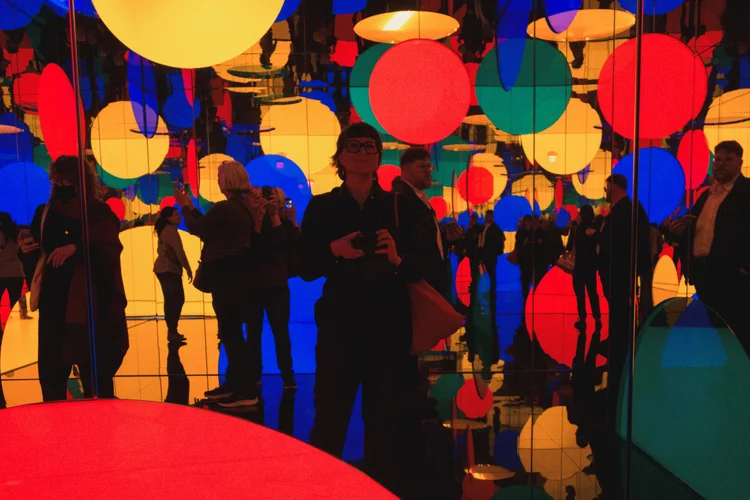
Inside Yayoi Kusama’s Dreaming of Earth’s Sphericity, I Would Offer My Love at SFMOMA, February 2025 |
|
|
ABOUT + SUPPORT Canan Marasligil (she/they) is a writer, literary translator and artist based in Amsterdam. She established the attention span website and its newsletter to publish their work independently: making the time to reflect, analyse and imagine. thank you so much for reading! you can support the attention span by contributing as much as you’d like between 2,50 € and 25 € via this pay pal link.
|
|
Sharing is loving 🖤 Here’s the link to subscribe: theattentionspan.com/subscribe
When quoting or sharing content, please credit the author. Unless otherwise stated, all content (writing, photography, design) created and published in this newsletter is authored by Canan Marasligil.
|
|
|
|